Course Type: Course

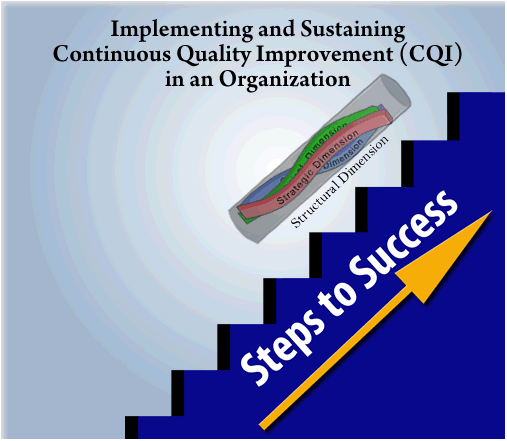
  • Implementing and Sustaining Continuous Quality Improvement (CQI) in an Organization

    Implementing and Sustaining Continuous Quality Improvement (CQI) in an Organization

    Course Summary

    There are four sections in this course:

    • Section 1: CQI Myths
    • Section 2: Brief Overview of CQI
    • Section 3: Incorporating CQI into Organizational Culture
    • Section 4: Demonstrating How CQI works in Governmental Public Health – A Case Study

    There are review questions at the end of each section. These review questions will provide you with an opportunity to apply the knowledge and skills presented in these sections. There is a post-test at the end of the course.

    Intended Audience

    Board of Health members, Local Public Health Department Directors, Board of Supervisor members, County Leaders, and other professionals who would benefit from this training

    Learning Objectives:

    Section 1: CQI Myths

    Upon completion of this part, you will be able to:

    • Describethree common myths of CQI and the corresponding reality

    Section 2: Brief Overview of CQI

    Upon completion of this part, you will be able to:

    • Definecontinuous quality improvement and how it can be used to enhance organizational performance
    • Describecommon characteristics of CQI

    Section 3: Incorporating CQI into an Organization’s Culture

    Upon completion of this part, you will be able to:

    • Describethe elements needed for an organization to successfully implement and sustain CQI activities
    • Discusshow to successfully incorporate CQI into an organization’s culture

    Section 4: Demonstrating how CQI works in Governmental Public Health – A Case Study

    Upon completion of this part, you will be able to:

    • Identifyexamples of how CQI has been implemented in local public health agency

    Pre-requisites/Learning Level

    No pre-requisites

    Competencies addressed

    Core competencies for Public Health Professionals Identified

    Domain 8: Leadership and Systems Thinking Skills

    • 8A9. Describes ways to improve individual and program performance

    CEUs Offered

    None

    Cost

    Free

    Modality/format

    Online Self-Pace

    Length

    1 hour

    Presenter(s) and/or Content Experts

    Technical requirements:

    • Adobe Acrobat Reader 
    • Flash Player 
    • Speakers

    Registration requirements

    Register a free account

    Creation and/or update

    June 18, 2013
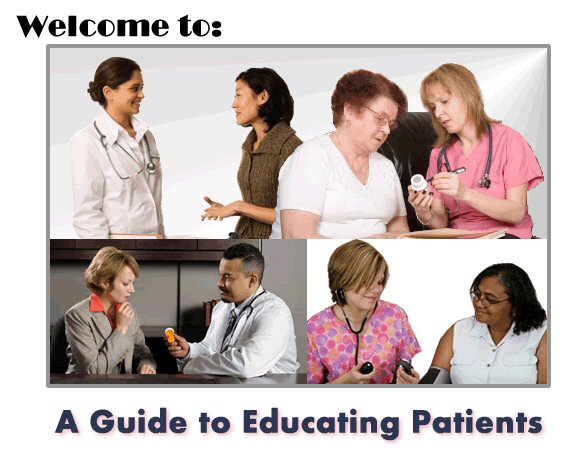
  • A Guide To Educating Patients

    A Guide To Educating Patients

    There are five sections in this course:

    • Section 1: Introduction
    • Section 2: Step 1 – Assessment
    • Section 3: Step 2 – Planning
    • Section 4: Step 3 – Implementing
    • Section 5: Step 4 – Documenting

    There is a post-test at the end of the course.

    Intended Audience

    healthcare providers that contract with the Iowa Department of Public Health WISEWOMAN/Care for Yourself program to provide cardiovascular screening and treatment to eligible women, ages 40-64. The training course would also prove beneficial for any healthcare providers considering the implementation of patient education into their practice

    Learning Objectives:

    After completing this course, participants should be able to:

    • Describewhat benefits can be gained from providing patient education
    • Describehow the elements of the patient education model can affect patient outcomes
    • Explainwhat is involved in each of the four steps to patient education
    • Demonstratehow evaluation is used in all four steps of patient education
    • Identifyquestions that would be used to assess the patient’s needs, concerns and preferences
    • Recognizehow culture will affect the assessment, planning, implementation and evaluation of patients education
    • Identifyimportant considerations when developing mutual goals when building your plan
    • Explainwhat the important elements are to get the message conveyed to your patient
    • Indicateways in which challenges and barriers can be overcome
    • Describethe importance of documenting and/or keeping detailed records

    Pre-requisites/Learning Level

    No pre-requisites

    Competencies addressed

    Competencies identified

    Domain 2: Policy Development/Program Planning Skills

    • 2A8. Implements policies, programs, and services
    • 2A10. Gathers information for evaluating policies, programs, and services (e.g. outputs, outcomes, processes, procedures, return on investment)

    Domain 3: Communication Skills

    • 3A1. Identifies the literacy of populations served (e.g. ability to obtain, interpret, and use health and other information; social media literacy.)

    CEUs Offered

    None

    Cost

    Free

    Modality/format

    Online Self-Pace

    Length

    1 hour

    Presenter(s) and/or Content Experts

    Terry Meek

    Technical requirements:

    • Adobe Acrobat Reader 
    • Flash Player 
    • Speakers

    Registration requirements

    Register a free account

    Creation and/or update

    November 12, 2012

  • Salt/Sodium Reduction: Opportunities for Change

    Salt/Sodium Reduction: Opportunities for Change

    There are four sections in this course:

    • Section 1: Salt and Sodium – Sources and Recommendations
    • Section 2: Public Health Imperative
    • Section 3: Campaigns and Actions
    • Section 4: How Can You Use this Knowledge

    Intended Audience

    Healthcare providers who screen and treat WISEWOMEN patients; Physicians, Physicians Assistants, Nurses, Medical Assistants and health educators.

    Learning Objectives:

    At the end of this course, participants will be able to:

    • Identifythe sources of salt/sodium intake
    • Applythe recommendations of salt/sodium intake
    • Discusssalt/sodium reduction efforts as a public health imperative
    • Demonstratethe association between salt/sodium intake and high blood pressure
    • Recognizethe current campaigns and activates accomplished in the United States at local, state and national levels and on other global levels.
    • Predictfuture strategies and actions by local, state, and national level organizations
    • Applythe knowledge gained in this training to their own patients

    Pre-requisites/Learning Level

    No pre-requisites

    Competencies addressed

    Core competencies for Public Health Professionals identified

    Domain 2: Policy Development/Program Planning Skills

    • 2A6. Gathers information that can inform options for policies and services (e.g., secondhand smoking policies, data uses policies, HR policies, immunization programs, food safety programs)
    • 2A7. Describes implications of policies, programs, and services
    • 2A8. Implements policies, programs, and services
    • 2A10. Gathers information for evaluating policies, programs, and services (e.g., outputs, outcomes, processes, procedures, return on)

    CEUs Offered

    None

    Cost

    Free

    Modality/format

    Online Self-Pace

    Length

    1 hour

    Presenter(s) and/or Content Experts

    Terry Meek

    Technical requirements:

    • Adobe Acrobat Reader 
    • Flash Player 
    • Speakers

    Registration requirements

    Register a free account

    Creation and/or update

    November 12, 2012

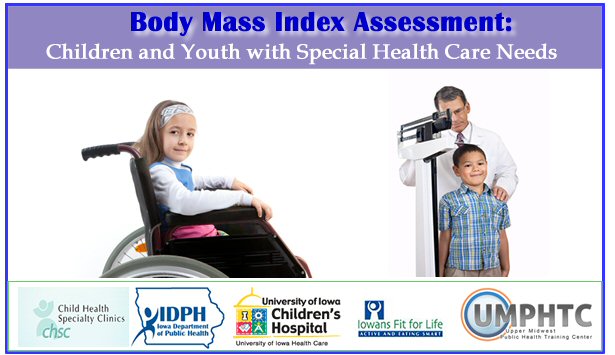
  • Body Mass Index Assessment: Children and Youth with Special Health Care Needs

    Body Mass Index Assessment: Children and Youth with Special Health Care Needs

    There are four sections in this course:

    • Section 1: Overview of BMI Assessment: Children and Youth with Special Health Care Needs
    • Section 2: Weighing the Child with Special Health Care Needs
    • Section 3: Measuring Height in the Child with Special Health Care Needs
    • Section 4: Managing Behavior while Measuring BMI in the Child with Special Health Care Needs

    There is a post-test at the end of the course. You have to score 80% or higher on the post-test to receive a certificate of completion.

    A Certificate of Completion is awarded on successful completion of this course. 

    Intended Audience

    school nurses, dietitians, primary physicians, medical residents, pediatricians, and nurses in clinical setting, and anyone who may need a skill to measure body mass index in children and youth with the special health care needs.

    Learning Objectives:

    Upon completion of this part, you will be able to:

    Section 1 Learning Objectives

    • Recognizethe implications of facts about overweight or underweight children
    • Describehow Body Mass Index (BMI) is used in weight assessment
    • Calculatea Body Mass Index (BMI) score
    • Interpreta child’s Body Mass Index (BMI) percentile
    • Recognizethe importance of assessing BMI in CYSHCN
    • Explainthe challenges experienced while measuring BMI in this population

    Section 2 Learning Objectives

    • Propertyimplement the standard procedure for weighting a child
    • Propertyimplement two alternative procedures for weighing a child who uses a wheelchair
    • Identifythe nuances that may arise when interpreting weight values in CYSHCN

    Section 3 Learning Objectives

    • Properlyimplement the standard procedure for measuring height of a child
    • Identifycertain instances in which specialized methods of obtaining height of a child are required
    • Properlyimplement two alternative procedures for measuring height of a child who is wheelchair-bound

    Section 4 Learning Objectives

    • Anticipatethe behavioral issues that may exist while measuring BMI
    • Implementeffective strategies for addressing behavioral issues while measuring BMI
    • Makeproper use of picture supports while taking height and weight
    • Makeproper use of the Peer Modeling video for height and weight

    Pre-requisites/Learning Level

    No pre-requisites

    Competencies addressed

    Core Competencies for Public Health Professionals identified

    Domain 1: Analytic/Assessment Skills

    • 1A1. Describes factors affecting the health of a community (e.g., equity, income, education, environment)
    • 1A10. Uses quantitative and qualitative data
    • 1A12. Contributes to assessments of community health status and factors influencing health in a community (e.g., quality, availability, accessibility, and use of health services; access of affordable housing)

    Domain 4: Cultural Competency Skills

    • 4A3. Describes the ways diversity may influence policies, programs, services, and the health of a community

    CEUs Offered

    None

    Cost

    Free

    Modality/format

    Online Self-Pace

    Length

    2 hour

    Presenter(s) and/or Content Experts

    Stephany Mottet

    Technical requirements:

    • Adobe Acrobat Reader 
    • Flash Player 
    • Speakers

    Registration requirements

    Register a free account

    Creation and/or update

    November 12, 2012

  • Leadership, Strategic Planning and Systems Approaches

    Intended Audience:

    Learning Objectives:

    Pre-requisites/Learning Level:

    None

    Competencies addressed:

    CHCM-R07 Utilize effective communication and marketing principles to impact primary health care organization problems and challenges specific to targeted audiences.

    CEUs Offered:

    Cost:

    Free

    Modality/format:

    Online Self-Pace

    Length:

    1 hour

    Presenter(s) and/or Content Experts:

    Technical requirements:

    • Adobe Acrobat Reader 
    • Speakers

    Registration requirements:

    Register a free account

    Creation and/or update: November 12, 2012

  • A Physician’s Practical Guide to Culturally Competent Care

    With the increasing diversity of the United States’ population, physicians are more and more likely to encounter situations that require the delivery of culturally competent care, access to a vast array of language services, and supportive health care organizations.

  • Effective Communication for Environmental Public Health

    Contact: N/A
    Phone: (206) 685-1130
    E-mail: nwcphp@u.washington.edu

    Description:
    Do you find yourself struggling to communicate your public health message? This self-paced, interactive module is designed for public health professionals, especially those responsible for implementing environmental health programs. It introduces key communication strategies to help field workers successfully educate the public about environmental public health issues, communicate important environmental health information to diverse audiences, resolve conflicts, and market the value of environmental public health activities to clients and the public.

    Objectives:

    • Summarize the five components of the communication process
    • Describe three skills important for effectively educating the public about environmental public health issues
    • Explain four skills for communicating information to a variety of audiences
    • Describe five key skills that are necessary for facilitating the resolution of a job-related communication conflicts
    • Explain four strategies that are important for marketing the value of environmental public health activities to clients and the public

    Delivery Modality:
    Online course with interactive exercises

    Intended Audience/Level of Training:

    Public health professionals, especially practitioners who are responsible for implementing environmental health programs.

    Course Length:
    1.5 hours

    Costs:
    Free

    Continuing Education Units (CEU):
    1.5 contact hours of continuing education credits

    Competency:
    Communications 1.1 & 1.8. Listen actively and respectfully while acknowledging the thoughts and opinions of others.  Foster communication between health care providers and patients.

    Launch:

    External Training – Northwest Center for Public Health Practice

  • Improving Interpersonal Communication and Relationships

    The purpose of this course is to focus on the communication skills you will need as a leader in a public health department. It is well known that having effective communication skills is crucial to managing staff and clients in a cooperative and functional manner, and that being able to clearly present ideas enhances career mobility. The communication elements discussed in this course are designed to provide insight into your professional and personal communication.

    Intended Audience:

    Aware

    Learning Objectives:

    • Classify the impact of verbal and non-verbal communication
    • Identify behavioral and communication styles
    • Explain how different communication styles clash
    • Describe how to adjust to the different communication styles
    • Weigh the perspectives of others

    Pre-requisites/Learning Level:

    No Pre-requisites

    Competencies addressed:

    Communication 1.1.  Listen actively and respectfully while acknowledging the thoughts and opinions of other.

    CEUs Offered:

    N/A

    Cost:

    Free

    Modality/format:

    Online Self-Pace

    Length:

    2 hours

    Presenter(s) and/or Content Experts:

    Technical requirements:

    • Adobe Acrobat Reader 
    • Speakers

    Registration requirements:

    Register a free account

    Creation and/or update: October 16, 2012

  • Leadership Management Communication

    Leadership Management Communication

    No matter how effective a leader/manager you already are, this course is designed to refresh and refine the skills needed to lead your teams to success in today’s fast-paced and stressful health care environment.  By exploring effective leadership styles and strategies, this course provides specific tools to enhance leadership/management communication.

    Intended Audience:

    Learning Objectives:

    By the end of the course, you should be able to do the following:

    • Identify the differences between leadership and management, describe the tasks and essentials of effective leadership, and identify the differences between dissonant and resonant leadership styles
    • Understand how and why well intentioned management strategies sometimes backfire, and how to keep that from happening
    • Apply strategies that enable you to think, react, communicate, and lead with high levels of emotional intelligence
    • Identify the majority reasons for low employee motivation and utilize strategies that motivate and inspire the workforce to maximize individual and group performance
    • Understand ways to identify morale problems and apply strategies that ameliorate or reflect moral problems as well as negative mood contagion
    • Increase your ability to promote ideas and plans through the application of specific persuasion and influence strategies
    • Understand the qualities of an effective change manager
    • Understand the characteristics and components of successful teams and apply strategies to enhance team communication

    Pre-requisites/Learning Level:

    None

    Competencies addressed:

    Communication 1.3, Leadership 11.1 and 11.8, and Team Building 16.3.  Utilize effective communication to facilitate team development.  Role model professional values, beliefs and ethics.  Establish an environment within the organization where employees feel empowered and supported.  Ensure that a process is used to share ideas, prioritize and formulate plans among groups.

    CEUs Offered:

    ASNA Nursing: 2.6 CEU and/or Social Work: 2.5 CEU

    Cost:

    Free

    Modality/format:

    Online Self-Pace

    Length:

    3 hours

    Presenter(s) and/or Content Experts:

    Technical requirements:

    • Adobe Acrobat Reader 
    • Speakers

    Registration requirements:

    Register a free account

    Creation and/or update: October 16, 2012

  • Managing Diversity Begins With You

    Managing Diversity Begins With You

    The purpose of this intermediate course is to acquire a conceptual framework with tools to manage diversity in the workplace as a way of improving service delivery, quality, and accessibility. It is expected that each participant will be able to identify their role in their own organization with respect to diversity and cultural competency and to position their organization as a leading organization in the delivery of culturally competent services.

    Intended Audience:

    Knowledgeable

    Learning Objectives:

    • To mange workplace diversity by enhancing communication skills
    • To manage workplace diversity by enhancing conflict resolution skills with individuals and groups representing diverse cultures
    • To manage workplace diversity by enhancing awareness, acceptance, and understanding of diverse health care beliefs and practices

    Pre-requisites/Learning Level:

    None

    Competencies addressed:

    Communication 1.4 and 1.6.  Express empathy and respond accordingly to meet the needs of the interaction or situation.  Apply appropriate methods for interacting sensitively, effectively, and professionally with persons from diverse backgrounds. 

    CEUs Offered:

    N/A

    Cost:

    Free

    Modality/format:

    Online Self-Pace

    Length:

    2 hours

    Presenter(s) and/or Content Experts:

    Technical requirements:

    • Adobe Acrobat Reader 
    • Speakers

    Registration requirements:

    Register a free account

    Creation and/or update: October 16, 2012