Course Type: Course

  • The Messenger Chronicles: Managing Stress and Time

    The Messenger Chronicles: Managing Stress and Time

    The “Messenger Chronicles” online training series presents ideas for communication in difficult situations.  The “Managing Stress and Time” module, helps learners to recognize the symptoms of stress and the factors that may increase their susceptibility to stress.  Strategies to manage stress are offered in the scenario-based training.  Learners are also given a framework for managing and prioritizing tasks to help minimize “stress-causing” situations.  Job aids like the “Project Startup Tool” and the “Urgent/Important Matrix” are provided for learners’ use.

    “Managing Stress and Time” features strategies and frameworks used in real world situations that learners can apply to their own environments.  Open-ended and multiple-choice questions give learners the opportunity to reflect on the course content and compare their thoughts to expert recommendations.

    Intended Audience:

    Learning Objectives:

    At the end of this course, you will be able to do the following:

    • List four symptoms of stress
    • Describe two ways people react to stress
    • List some factors that affect a person’s vulnerability to stress
    • List and describe four ways to manage stress
    • Explain the “myth of multi-tasking”
    • Describe how the “Urgent/Important” matrix can be applied to your work
    • List two reasons why a person may procrastinate

    Pre-requisites/Learning Level:

    None

    Competencies addressed:

    Communication 1.5.  Provide clear and concise feedback that communicates expectations to peers, management, and customers

    CEUs Offered:

    CHES to receive 1 Category / CECH in health education, 1 contact hour in nursing continuing education

    Cost:

    Free

    Modality/format:

    Online Self-Pace

    Length:

    20 minutes

    Presenter(s) and/or Content Experts:

    Technical requirements:

    • Adobe Acrobat Reader 
    • Speakers

    Registration requirements:

    Register a free account
    Creation and/or update: October 17, 2012

  • Experiences with Strategic Planning in Public Health Organizations

    Contact: Brandi Bordelon
    Phone: 504-988-1342
    E-mail: trdirect@tulane.edu

    Description: Strategic planning has been known to produce positive results, so why are many state and local health departments hesitant to try it? We’ll explore the issue in-depth.

    Competency: CHCM-M04, M05, M06, M07 

  • Exploring Cross-Cultural Communication

    Exploring Cross-Cultural Communication

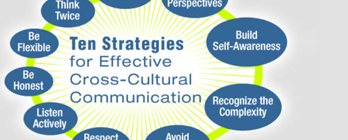
    This course invites learners to spend time thinking about and developing their own responses to a variety of ideas and situations about culture, communication and public health. Learners will explore the meaning of culture, methods of communications, and strategies for communicating more effectively.

    Intended Audience

    General

    Learning Objectives:

    • Give examples of discriminating and non-discriminating practices in providing public health services
    • Recognize effective methods/strategies/techniques for unbiased communication
    • Explain how effective cross-culture communication influences public health service and program acceptance
    • Identify specific factors that influence and individuals or group’s acceptance of public health information and services
    • Describe job-specific benefits and effective cross-cultural communication
    • Define culture. Explain the importance of a diverse public health workforce
    • Develop increased awareness of diversity
    • Understand how and why stereotypes/generalizations are created
    • Identify the cultural groups served by the unit/organization the participant represents

    Pre-requisites/Learning Level

    No pre-requisites

    Competencies addressed

    Communication 1.6. and 1.7. Apply appropriate methods for interacting sensitively, effectively, and professionally with persons from diverse backgrounds. Recognize cultural and linguistic differences when communicating and appropriately seek translation services and/or interpreter.

    CEUs Offered

    2.5 CHECH in health education, 2.5 contact hours in nursing, 2.5 hours general

    Cost

    Free

    Modality/format

    Online Self-Pace

    Length

    2.5 hours

    Presenter(s) and/or Content Experts

    Marita Murrman

    Technical requirements:

    • Adobe Acrobat Reader 
    • Flash Player 
    • Speakers

    Registration requirements

    Register a free account

    Creation and/or update

    October 17,2012

  • Social Marketing and Public Health: Effective Campaigns and How They Work

    Social Marketing and Public Health: Effective Campaigns and How They Work

    This presentation provides an overview of the theories behind social marketing, social marketing strategies, how it works, and examples of effective campaigns

    Intended Audience:

    Learning Objectives:

    By the end of the course, you should be able to do the following:

    • Understand social marketing.
    • Social marketing theories and strategies.
    • Principals and evidence of effectiveness.

    Pre-requisites/Learning Level:

    None

    Competencies addressed:

    Communications 1.9.  Share information that is understood by the average person using the media, various electronic technologies, and community networks.

    CEUs Offered:

    N/A

    Cost:

    Free

    Modality/format:

    Online Self-Pace

    Length:

    1 hour

    Presenter(s) and/or Content Experts:

    Technical requirements:

    • Adobe Acrobat Reader 
    • Speakers

    Registration requirements:

    Register a free account

    Creation and/or update: October 17, 2012

  • Conflict Management: Lessons from the Field

    Course Summary

    The purpose of this course is to provide practical, hands on, experience in conflict management. The course will focus on how conflict management can be used in a variety of work settings.

    Intended Audience

    General

    Learning Objectives:

    • Define conflict and resolution
    • Know how to structure management process
    • Be able to feel more confident about approaching conflicts

    Pre-requisites/Learning Level

    No pre-requisites

    Competencies addressed

    Conflict Management 2.1. Apply problem-solving techniques to identify the problem, determine solutions and implement a solution/response.

    CEUs Offered

    None

    Cost

    Free

    Modality/format

    Online Self-Pace

    Length

    3 hours

    Presenter(s) and/or Content Experts

    Technical requirements:

    • Adobe Acrobat Reader 
    • Flash Player 
    • Speakers

    Registration requirements

    Register a free account

    Creation and/or update

    October 17, 2012

  • IS 26 – Guide to Points of Distribution

    IS 26 – Guide to Points of Distribution

    Course Summary

    This guide was developed to support the Points of Distribution (POD) overview video and provide an in depth look into the planning, operations, and demobilization stages of a POD mission. The lessons detail the staffing and procedures any state will need to plan for, execute, and shut down POD operations. The guide also includes key lessons such as safety, equipment, and resource accountability and informs the reader about the “Adopt a POD” program being used by the state of Washington

    Intended Audience

    State and Local Emergency Managers

    Learning Objectives:

    By the end of reading this Guide you will be able to:

    • Describe Points of Distribution
    • Explain how Points of Distribution are set up and operated
    • Understand how to supervise a Point of Distribution staff

    Pre-requisites/Learning Level

    No pre-requisites

    Competencies addressed

    Competencies identified

    CEUs Offered

    4

    Cost

    Free

    Modality/format

    Online Self-Pace

    Length

    1 hour

    Presenter(s) and/or Content Experts

    FEMA

    Technical requirements:

    • Adobe Acrobat Reader 
    • Speakers

    Registration requirements

    Register a free account

    Creation and/or update

    July 31, 2012

  • IS-1300: Introduction to Continuity of Operations

    IS-1300: Introduction to Continuity of Operations

    This course is intended to lay the foundation of knowledge for students who wish to increase their understanding of continuity and building a comprehensive continuity program in their organization or jurisdiction. This course will replace IS-546.A Continuity of Operations Awareness Course and IS-547.A Introduction to Continuity of Operations. IS-546 and IS-547 contain outdated materials and information, are redundant (they contain the same information), and do not align with current federal guidance. IS-1300 eliminates the redundancies by compiling the introductory continuity information into one course, and ensures that the information presented is in alignment with current federal guidance (e.g., Continuity Guidance Circular, dated February 2018). Target Audience: This course is intended for a whole community audience – federal, state, local, tribal, and territorial government employees, as well as community-based organizations and private sector partners responsible for or interested in continuity. Learning Objectives: 1. Define continuity. 2. Describe the importance of continuity planning for organizations and communities. 3. Establish the foundation for a continuity program in your organization. 4. Summarize the key elements of a continuity program. 5. Explain the Whole Community approach to continuity planning. Continuity is a critical part of every organization’s mission to ensure continuation of their essential functions and services during a broad range of circumstances. A wide range of threats and hazards continue to pose significant risks to the Nation, affirming the need for continuity capabilities at all levels of government, within the private sector, and among non-governmental and community-based organizations. This course will also identify the fundamentals of building a continuity capability within your organization.

    Course Objectives:

    Course Objectives:

    • Define continuity.
    • Describe the importance of continuity planning for organizations and communities.
    • Recognize elements required for a continuity program in your organization.
    • Describe the key elements of a continuity program.
    • Explain the Whole Community approach to continuity planning.


    Prerequisites

    None

    CEUs:

    0.1

    Course Length:

    1 hour

    Cost:

    Free

    Modality/format:

    Online Self-Pace

    Technical requirements:

    • Adobe Acrobat Reader 
    • Speakers

    Registration requirements:

    Register a free account
    Creation and/or update: November 1, 2019

  • IS-100.C Introduction to Incident Command

    IS-100.C Introduction to Incident Command

    ICS 100, Introduction to the Incident Command System, introduces the Incident Command System (ICS) and provides the foundation for higher level ICS training. This course describes the history, features and principles, and organizational structure of the Incident Command System. It also explains the relationship between ICS and the National Incident Management System (NIMS). The Emergency Management Institute developed its ICS courses collaboratively with:

    • National Wildfire Coordinating Group (NWCG)
    • U.S. Department of Agriculture
    • United States Fire Administration’s National Fire Programs Branch

    Course Objectives:

    At the completion of this course, you should be able to:

    • Explain the principles and basic structure of the Incident Command System (ICS).
    • Describe the NIMS management characteristics that are the foundation of the ICS.
    • Describe the ICS functional areas and the roles of the Incident Commander and Command Staff.
    • Describe the General Staff roles within ICS.
    • Identify how NIMS management characteristics apply to ICS for a variety of roles and discipline areas.

    Primary Audience

    The target audience includes persons involved with emergency planning, and response or recovery efforts.

    Prerequisites

    None

    CEUs:

    0.2

    Course Length:

    2 hours

    Cost:

    Free

    Modality/format:

    Online Self-Pace

    Technical requirements:

    • Adobe Acrobat Reader 
    • Speakers

    Registration requirements:

    Register a free account

    Creation and/or update: June 25, 2018

  • IS-200.C: Basic Incident Command System for Initial Response

    IS-200.C: Basic Incident Command System for Initial Response

    IS200, Basic Incident Command System for Initial Response, reviews the Incident Command System (ICS), provides the context for ICS within initial response, and supports higher level ICS training. This course provides training on, and resources for, personnel who are likely to assume a supervisory position within ICS.  
    The Emergency Management Institute developed its ICS courses collaboratively with:

    • National Wildfire Coordinating Group (NWCG)
    • U.S. Department of Agriculture
    • United State Fire Administration’s National Fire Programs Branch

    Note: IS-200.c is an updated version of the IS-200 course. If you have successfully completed IS-200.b or IS-200.a, you may want to review the new version of the course. For credentialing purposes, the courses are equivalent.

    NIMS Compliance

    This course is NIMS compliant and meets the NIMS Baseline Training requirements for IS-200.

    Course Objectives:

    At the completion of this course, you should be able to: Describe the course objectives and summarize basic information about the Incident Command System (ICS) and National Incident Management System (NIMS):

    • Describe how the NIMS Management Characteristics relate to Incident Command and Unified Command.
    • Describe the delegation of authority process, implementing authorities, management by objectives, and preparedness plans and objectives.
    • Identify ICS organizational components, the Command Staff, the General Staff, and ICS tools.
    • Describe different types of briefings and meetings.
    • Explain flexibility within the standard ICS organizational structure.
    • Explain transfer of command briefings and procedures.
    • Use ICS to manage an incident or event.


    Primary Audience

    The intended audience(s) are response personnel at the supervisory level who are involved with emergency planning, response, or recovery efforts.

    Prerequisites


    • IS-100.c An Introduction to the Incident Command System (ICS 100).


    CEUs:

    0.4

    Cost:

    Free

    10. Modality/format: Online Self-Pace

    Length:

    4 hours

    Technical requirements:


    • Adobe Acrobat Reader 
    • Speakers


    Registration requirements:

    Register a free account

    Creation and/or update: March 11, 2019

  • Nutrition for Children with Special Health Care Needs

    The Pacific West MCH Distance Learning Network was developed in response to the identified training needs of maternal and child health practitioners providing nutrition services in the Pacific West Cluster and to the MCHB continuing education program
    priority established in maternal and child nutrition. The overall goal of the project is to develop a distance-learning network among MCHB-sponsored training programs and state Title V agencies to strengthen nutrition services for children with special
    health care needs and their families in Regions VII, IX and X, including Alaska, Arizona, California, Colorado, Hawaii, Idaho, Montana, New Mexico, Nevada, Oregon, Utah, Washington, and Wyoming. This series of six self-study modules is a product of
    the Pacific West MCH Distance Learning Network. Much of the material was previously presented at in-person training sessions and is also available as a CD-ROM with resource notebook.

    Intended Audience:

    Maternal and Child Health practitioners providing nutrition services

    Learning Objectives:

    Pre-requisites/Learning Level:

    None

    Competencies addressed:

    CEUs Offered:

    N/A

    Cost:

    Free

    Modality/format:

    Online Self-Pace

    Length:

    1 hour

    Presenter(s) and/or Content Experts:

    Marion Taylor Baer, PhD, RD; Anne Bradford Harris, PhD, MPH, RD; Cristine Trahms, MS, RD, CD; Beth Ogata, MS, RD, CD

    Technical requirements:

    • Adobe Acrobat Reader 
    • Speakers

    Registration requirements:

    Register a free account
    Creation and/or update: January 31, 2013