Course Type: Course

  • Critical Thinking

    Critical Thinking

    Course Summary

    There are 6 steps in this course:

    • Step 1: Identify and Define the Problem
    • Step 2: Gather Information
    • Step 3: Develop Alternatives
    • Step 4: Select an Alternative
    • Step 5: Implement the Solution
    • Step 6: Evaluate the Solution

    Each module includes at least one Review Question.

    These review questions will provide you with an opportunity to apply the knowledge
    and skills presented in the module.

    Intended Audience

    Public health leaders who may need to solve a problem or crisis by thinking critically about it and make appropriate decisions using an
    established six step model

    Learning Objectives

    At the end of this course, the learner will have the ability required to:

    • Identify and clearly define a problem situation.
    • Gather facts about a problem situation in an efficient
      and effective manner.
    • Identify and categorize any constraints on possible
      solutions to a problem situation.
    • Employ an appropriate method to effectively generate
      alternative solutions to a problem situation
    • Use a set of criteria (feasibility, suitability, and
      flexibility) to evaluate alternative solutions to a problem situation.
    • Develop an action plan for implementing a solution to a
      problem situation.
    • Monitor progress after implementing a solution to a
      problem situation to evaluate whether or not objectives are met.

    Pre-requisites/Learning Level

    No Pre-requisites

    Competencies addressed

    Core Competencies for Public Health
    Professionals identified:

    Domain 1: Analytical/Assessment Skills

    • 1A1. Describes factors affecting the health of a community
      (e.g., equity, income, education, environment)

    Domain 2: Policy Development/Program Planning Skills

    • 2A6. Gathers information that can inform options for
      policies, programs, and services (e.g., secondhand smoking policies, data use
      policies, HR policies, immunization programs, food safety programs)

    Domain 5: Community Dimensions of Practice
    Skills

    • 5A2. Recognizes relationships that are affecting health in
      a community (e.g., relationships among health departments, hospitals, community
      health centers, primary care providers, schools, community-based organizations,
      and other types of organizations)

    CEUs Offered

    None

    Cost

    Free

    Modality/format

    Online Self-Pace

    Length

    1 hour

    Presenter(s) and/or Content Experts

    Technical requirements

    • Adobe Acrobat Reader 
    • Flash Player 
    • Speakers

    Registration requirements

    Register a free account

    Creation and/or update

    September 22, 2013

  • Financial Management

    Financial Management

    The University of Iowa College of Public Health’s Institute for Public Health Practice, in cooperation with the Iowa Association of Local Public Health Agencies (I-ALPHA), has developed a series of practiced-based educational programs targeted toward new public health administrators and nursing administrators. The programs are part of the Institute’s continuing effort to provide training to strengthen the skills and knowledge of the current public health workforce.

    Intended Audience

    public health administrators and nurse administrators who are relatively new in their positions (3 years or less) and who seek to enhance their skills and knowledge

    Learning Objectives:

    At the conclusion of this course, you will be able to:

    • Listcounty funding sources
    • Describethe annual budget cycle

    • Describethe financial structure of county government

    Pre-requisites/Learning Level

    No pre-requisites

    Competencies addressed

    Core competencies for Public Health Professionals identified

    Domain 7: Planning and Management Skills

    • 7A1. Describes the structures, functions, and authorizations of governmental public health programs and organizations
    • 7A2. Describes government agencies with authority to impact the health of a community
    • 7A3. Adheres to organizational policies and procedures
    • 7A4. Describes public health funding mechanisms (e.g., ategorical grants, fees, third-party reimbursement, tobacco taxes)
    • 7A5. Contributes to development of program budgets
    • 7A6. Provides information for proposals for funding (e.g., foundations, government agencies, corporations)
    • 7A7. Provides information for development of contracts and other agreements for programs and services

    CEUs Offered

    None

    Cost

    Free

    Modality/format

    Online Self-Pace

    Length

    1 hour

    Presenter(s) and/or Content Experts

    Jeffrey Horne

    Technical requirements:

    • Adobe Acrobat Reader 
    • Flash Player 
    • Speakers

    Registration requirements

    Register a free account

    Creation and/or update

    September 24, 2013

  • Managerial Communications

    On completion of this course, the user will be able to demonstrate written and oral communication skills that are needed as a leader in a health department by:  identifying communication skills, listing effective presentation skills, and distinguishing different writing techniques.

    Intended Audience:

    Learning Objectives:

    • Module 1:  Effective Interpersonal Communication – Distinguish the fundamental elements of message, explain the message model, identify tangible and intangible barriers, distinguish the levels of listening, describe the guides to good listening,and explain the key points of basic interpersonal communication
    • Module 2:  Presentation Skills – Identify the objectives of a good presentation, Distinguish physical, mechanical, and paralinguistic aspects of a presentation, identify ways to open a presentation, explain three things audiences respond to most, create a checklist of presentation skills, identify correct ways of presenting visual aids, identify ways to close presentations, and list ways to answer questions during and after a presentation
    • Module 3:  Good Writing Techniques – Differentiate among the states of writing, identify the proper use of transitions when writing, demonstrate appropriate use of descriptive adjectives, and demonstrate correct document formatting

    Pre-requisites/Learning Level:

    None

    Competencies addressed:

    Communication 1.2, 1.3 and 1.10.  Communicate effectively both in writing and orally with level appropriate for content and audience.  Utilize effective communication to facilitate team development.  Deliver organized and effective presentations
    or messages for diverse audiences and various purposes.

    CEUs Offered:

    N/A

    Cost:

    Free

    Modality/format:

    Online Self-Pace

    Length:

    3 hours

    Presenter(s) and/or Content Experts:

    Technical requirements:

    • Adobe Acrobat Reader 
    • Speakers

    Registration requirements:

    Register a free account

    Creation and/or update: September 28, 2013

  • Knowledge of Public Health

    Knowledge of Public Health

    Course Summary

    The University of Iowa College of Public Health’s Upper Midwest Public Health Training Center (UMPHTC), in cooperation with the Iowa Counties Public Health Association (ICPHA), has developed a series of practiced-based educational programs targeted toward new public health administrators and nursing administrators. The programs are part of the Institute’s continuing effort to provide training to strengthen the skills and knowledge of the current public health workforce. The purpose of the course is to cover topics that are especially relevant to new public health administrators. It is hoped that by the end of the course participants will have enhanced the knowledge, skills, and abilities they need to be a successful public health administrator.

    Consists of a one hour video segment which is accessible via video streaming technology. PowerPoint slides of the presentation are provided in PDF format. Participants will be assessed through practice exercises and an online post-test.

    Intended Audience

    public health administrators and nurse administrators who are relatively new in their positions (3 years or less) and who seek to enhance their skills and knowledge

    Learning Objectives:

    After conclusion of this course, you will be able to:

    • Discusscauses of disease and protection/prevention measures
    • Listcomponents of the public health system
    • Describethe Ten Essential Services and the three core functions of public health
    • Discusschallenges for the public health system

    Pre-requisites/Learning Level

    No pre-requisites

    Competencies addressed

    Competencies identified

    Domain 1: Analytical/Assessment Skills

    • 1A1. Describes factors affecting the health of a community (e.g., equity, income, education, environment).
    • 1B1. Describes factors affecting the health of a community (e.g., equity, income, education, environment).
    • 1C1. Describes factors affecting the health of a community (e.g., equity, income, education, environment).

    Domain 2: Policy Development/Program Planning Skills

    • 2A5. Identifies current trends (e.g., health, fiscal, social, political, environmental) affecting the health of a community
    • 2A7. Describes implications of policies, programs, and services
    • 2B7. Examines the feasibility (e.g., fiscal, social, political, legal, geographic) and implications of policies, programs, and services
    • 2B8. Recommends policies, programs, and services for implementation
    • 2A9. Explains the importance of evaluations for improving policies, programs, and services
    • 2B10. Explains the importance of evaluations for improving policies, programs, and services
    • 2C11. Explains the importance of evaluations for improving policies, programs, and services
    • 2A12. Describes how public health informatics is used in developing, implementing, evaluating, and improving policies, programs, and services (e.g., integrated data systems, electronic reporting, knowledge management systems, geographic information systems).

    Domain 3: Communication Skills

    • 3A8. Describes the roles of governmental public health, health care, and other partners in improving the health of a community
    • 3B8. Describes the roles of governmental public health, health care, and other partners in improving the health of a community
    • 3C8. Describes the roles of governmental public health, health care, and other partners in improving the health of a community

    Domain 4: Cultural Competency Skills

    • 4C5. Advocates for the diversity of individuals and populations being addressed in policies, programs and services to improve the health of a community

    Domain 5: Community Dimensions of Practice Skills

    • 5A1. Describes the programs and services provided by governmental and non-governmental organizations to improve the health of a community
    • 5B1. Distinguishes the roles and responsibilities of governmental and non-governmental organizations in providing programs and services to improve the health of a community

    Domain 6: Public Health Sciences Skills

    • 6A1. Describes the scientific foundation of the field of public health
    • 6B1. Discusses the scientific foundation of the field of public health
    • 6C1. Critiques the scientific foundation of the field of public health
    • 6A2. Identifies prominent events in the history of public health (e.g., smallpox eradication, development of vaccinations, infectious disease control, safe drinking water, emphasis on hygiene and hand washing, access to health care for people with disabilities)
    • 6B2. Describes how prominent events in the history of public health (e.g., smallpox eradication, development of vaccinations, infectious disease control, safe drinking water, emphasis on hygiene and hand washing, access to health care for people with disabilities)
    • 6C2. Explains lessons to be learned from prominent events in the history of public health (e.g., smallpox eradication, development of vaccinations, infectious disease control, safe drinking water, emphasis on hygiene and hand washing, access to health care for people with disabilities)
    • 6A3. Describes how public health sciences (e.g., biostatistics, epidemiology, environmental health sciences, health services administration, social and behavioral sciences, and public health informatics) are used in the delivery of the 10 Essential Public Health Services
    • 6B3. Applies public health sciences (e.g., biostatistics, epidemiology, environmental health sciences, health services administration, social and behavioral sciences, and public health informatics) in the delivery of the 10 Essential Public Health Services
    • 6C3. Ensures public health sciences (e.g., biostatics, epidemiology, environmental health services, and social and behavioral sciences, and public health informatics) are applied in the delivery of the 10 Essential Public Health Services

    Domain 7: Financial Planning and Management Skills

    • 7A1. Describes the structures, functions, and authorizations of governmental public health programs and organizations
    • 7B1. Explains the structures, functions, and authorizations of governmental public health programs and organizations
    • 7A2. Describes government agencies with authority to impact the health of a community
    • 7A10. Describes how teams help achieve program and organizational goals (e.g., the value of different disciplines, sectors, skills, experiences, and perspectives; scope of work and timeline).

    Domain 8: Leadership and Systems Thinking Skills

    • 8A1. Incorporates ethical standards of practice (e.g., Public Health Code of Ethics) into all interactions with individuals, organizations, and communities
    • 8A2. Describes public health as part of a larger inter-related system of organizations that influence the health of populations at local, national, and global levels
    • 8A3. Describes the ways public health, health care, and other organizations can work together or individually to impact the health of a community
    • 8B3. Explains the ways public health, health care, and other organizations can work together to individually to impact the health of a community
    • 8A5. Identifies internal and external facilitators and barriers that may affect the delivery of the 10 Essential Public Health Services (e.g., using root cause analysis and other quality improvement methods and tools, problem solving)
    • 8A6. Describes needs for professional development (e.g., training, mentoring, peer advising, coaching)
    • 8A9. Describes ways to improve individual and program performance
    • 8B10. Advocates for the role of public health in providing population health services
    • 8C10. Advocates for the role of public health in providing population health services

    CEUs Offered

    None

    Cost

    Free

    Modality/format

    Online Self-Pace

    Length

    1 hour

    Presenter(s) and/or Content Experts

    Christopher Atchison, BA, MPA

    Technical requirements:

    • Adobe Acrobat Reader 
    • Flash Player 
    • Speakers

    Registration requirements

    Register a free account

    Creation and/or update

    October 15, 2013
  • Human Resources

    Human Resources

    The University of Iowa College of Public Health’s Institute for Public Health
    Practice, in cooperation with the Iowa Association of Local Public Health
    Agencies (I-ALPHA), has developed a series of practiced-based educational
    programs targeted toward new public health administrators and nursing
    administrators. The programs are part of the Institute’s continuing effort to
    provide training to strengthen the skills and knowledge of the current public
    health workforce.

    Intended Audience

    Public
    health administrators and nurse administrators who are relatively new in their
    positions (3 years or less) and who seek to enhance their skills and knowledge

    Learning Objectives

    At the conclusion of this course, you will be
    able to:

    • Identify the major duties and responsibilities of Human
      Resources.
    • Describe several Human Resource issues.
    • Discuss the major legal issues facings employers in the
      workplace.

    Pre-requisites/Learning Level

    No pre-requisites

    Competencies addressed

    Core Competencies for Public Health
    Professionals identified:

    Domain 7: Domain: Financial Planning and
    Management Skills

    • 7A3. Adheres to organizational
      policies and Procedures.
    • 7A10. Describes how teams help achieve program and organizational goals (e.g.,
      the value of different disciplines, sectors, skills, experiences, and
      perspectives; scope of work and timeline).

    Domain 8: Leadership and Systems Thinking
    Skills

    • 8A5. Identifies internal and
      external facilitators and barriers that may affect the delivery of the 10
      Essential Public Health Services (e.g., using root cause analysis and other
      quality improvement methods and tools, problem solving).
    • 8A6. Describes needs for professional development (e.g., training, mentoring,
      peer advising, coaching).
    • 8A7. Participates in professional development opportunities.
    • 8B7. Ensures use of professional development opportunities by individuals and
      teams.
    • 8C7. Ensures use of professional development opportunities throughout the
      organization.

    CEUs Offered

    None

    Cost

    Free

    Modality/format

    Online Self-Pace

    Length

    1 hour

    Presenter(s) and/or Content
    Experts

    Paul Greufe, MBA

    Technical requirements

    • Adobe Acrobat Reader 
    • Flash Player 
    • Speakers

    Registration requirements

    Register a free account

    Creation and/or update

    October 17, 2013

  • Marketing

    Marketing

    The
    purpose of the course is to cover topics that are especially relevant to new
    public health administrators. It is hoped that by the end of the course
    participants will have enhanced the knowledge, skills, and abilities they need
    to be a successful public health administrator.

    Intended Audience

    Public health administrators and nurse administrators
    who are relatively new in their positions (3 years or less) and who seek to
    enhance their skills and knowledge

    Learning Objectives

    At the conclusion of this course, you will be
    able to:

    • Describe the key considerations in developing a marketing
      strategy for public health.
    • Describe the interdependency of marketing strategy
      elements.
    • Discuss effective communication techniques and common
      pitfalls.

    Pre-requisites/Learning Level

    No pre-requisites

    Competencies addressed

    Core Competencies for Public Health
    Professionals identified:

    Domain 3: Communication Skills

    • 3A2. Communicates in writing and orally with linguistic and
      cultural proficiency (e.g., using age-appropriate materials, incorporating
      images).
    • 3B2. Communicates in writing and orally with linguistic and cultural
      proficiency (e.g., using age-appropriate materials, incorporating images).
    • 3C2. Communicates in writing and orally with linguistic and cultural
      proficiency (e.g., using age-appropriate materials, incorporating images).
    • 3A4. Suggests approaches for disseminating public health data and information
      (e.g., social media, newspapers, newsletters, journals, town hall meetings, libraries,
      neighborhood gatherings).
    • 3B4. Selects approaches for disseminating public health data and information
      (e.g., social media, newspapers, newsletters, journals, town hall meetings,
      libraries, neighborhood gatherings).
    • 3C4. Evaluates approaches for disseminating public health data and information
      (e.g., social media, newspapers, newsletters, journals, town hall meetings,
      libraries, neighborhood gatherings).
    • 3A5. Conveys data and information to professionals and the public using a
      variety of approaches (e.g., reports, presentations, email, letters).
    • 3B5. Conveys data and information to professionals and the public using a
      variety of approaches (e.g., reports, presentations, email, letters, press
      releases).
    • 3C5. Conveys data and information to professionals and the public using a
      variety of approaches (e.g., reports, presentations, email, letters, testimony,
      press interviews).
    • 3A6. Communicates information to influence behavior and improve health (e.g.,
      uses social marketing methods, considers behavioral theories such as the Health
      Belief Model or Stages of Change Model).
    • 3B6. Communicates information to influence behavior and improve health (e.g.,
      uses social marketing methods, considers behavioral theories such as the Health
      Belief Model or Stages of Change Model).
    • 3C6. Evaluates strategies for communicating information to influence behavior
      and improve health (e.g., uses social marketing methods, considers behavioral
      theories such as the Health Belief Model or Stages of Change Model).
    • 3A7. Facilitates communication among individuals, groups, and organizations.
    • 3B7. Facilitates communication among individuals, groups, and organizations.
    • 3C7. Facilitates communication among individuals, groups, and organizations.

    CEUs Offered

    None

    Cost

    Free

    Modality/format

    Online Self-Pace

    Length

    1 hour

    Presenter(s) and/or Content
    Experts

    Jennifer Lightbody, MHHA, BA

    Technical requirements

    • Adobe Acrobat Reader 
    • Flash Player 
    • Speakers

    Registration requirements

    Register a free account

    Creation and/or update

    October 18, 2013

  • Overall Aspects of Managing an Agency

    Overall Aspects of Managing an Agency

    The University of Iowa College of Public Health’s Upper Midwest Public Health
    Training Center (UMPHTC), in cooperation with the Iowa Counties Public Health
    Association (ICPHA), has developed a series of practiced-based educational
    programs targeted toward new public health administrators and nursing
    administrators. The programs are part of the Institute’s continuing effort to
    provide training to strengthen the skills and knowledge of the current public
    health workforce

    Intended Audience

    Public health administrators and nurse administrators who are relatively new in their positions (3 years or less) and who seek to
    enhance their skills and knowledge.

    Learning Objectives

    At the conclusion of this course, you will be able to:

    • Describe the roles and issues that occur in the management
      of a local public health agency.
    • Identify how to balance public health functions within a
      multi-focused agency.
    • Discuss the identification of training needs within an
      agency and how to address these needs.
    • Identify environmental health enforcement issues that may
      occur when contracting with local boards of health.

    Pre-requisites/Learning Level

    No pre-requisites

    Competencies addressed

    Core Competencies for Public Health Professionals
    identified:

    Domain 5: Community Dimensions of Practice
    Skills

    • 5A2. Recognizes relationships that are affecting health in
      a community (e.g., relationships among health departments, hospitals, community
      health centers, primary care providers, schools, community-based organizations,
      and other types of organizations).
    • 5B2. Identifies relationships that are affecting health in a community (e.g.,
      relationships among health departments, hospitals, community health centers,
      primary care providers, schools, community-based organizations, and other types
      of organizations).
    • 5A3. Suggests relationships that may be needed to improve health in a
      community.
    • 5B3. Suggests relationships that may be needed to improve health in a
      community.
    • 5C3. Suggests relationships that may be needed to improve health in a
      community.
    • 5A5. Collaborates with community partners to improve health in a community
      (e.g., participates in committees, shares data and information, connects people
      to resources).
    • 5B6. Facilitates collaborations among partners to improve health in a community
      (e.g., coalition building).
    • 5C6. Establishes written agreements (e.g., memoranda-of-understanding [MOUs],
      contracts, letters of endorsement) that describe the purpose and scope of
      partnerships.
    • 5A6. Engages community members (e.g., focus groups, talking circles, formal
      meetings, key informant interviews) to improve health in a community.
    • 5A8. Uses assets and resources (e.g., Boys & Girls Clubs, public libraries,
      hospitals,  faith-based organizations, academic institutions, federal
      grants, fellowship programs) to improve health in a community.
    • 5B9. Explains the ways assets and resources (e.g., Boys & Girls Clubs,
      public libraries, hospitals, faith-based organizations, academic institutions,
      federal grants, fellowship programs) can be used to improve health in a
      community.
    • 5C9. Negotiates for use of assets and resources (e.g., Boys & Girls Clubs,
      public libraries, hospitals, faith-based organizations, academic institutions,
      federal grants, fellowship programs) to improve health in a community.

    CEUs Offered

    None

    Cost

    Free

    Modality/format

    Online Self-Pace

    Length

    1 hour

    Presenter(s) and/or Content
    Experts

    Karen Fread RN, BSN, MBA

    Technical requirements

    • Adobe Acrobat Reader 
    • Flash Player 
    • Speakers

    Registration requirements

    Register a free account

    Creation and/or update

    October 18, 2013

  • Electronic BT Workshop for Sentinel Labs

    Electronic BT Workshop for Sentinel Labs

    The course consists of a Virtual Bioterrorism Workshop. In this interactive workshop you will determine whether to rule out or refer
    several organisms that are considered potential agents of bioterrorism by applying Laboratory Response Network protocols for Level A (sentinel)
    laboratories. When a possible agent of bioterrorism cannot be ruled out, you
    will view a video describing the clinical presentation and etiology of the
    agent.

    Intended Audience

    Laboratorians
    who handle biological and microbiological samples in clinical, reference,
    public health, animal, research or teaching laboratories.

    Learning Objectives

    After completing this course, you will be able
    to:

    1. Rule out or refer organisms using approved Laboratory
      Response Network protocols for Level A (sentinel) laboratories.
    2. Select the appropriate tests to use in determining
      whether to rule out or refer an organism.
    3. Describe the notification processes if a presented
      organism cannot be ruled out as a potential agent of bioterrorism.
    4. Describe the etiology and clinical presentation of the
      organisms reviewed.

    Pre-requisites/Learning Level

    No pre-requisites

    Competencies addressed

    Core Competencies for Public Health
    Professionals

    Domain 1: Analytical/Assessment Skills
    • 1A3. Applies ethical principles in accessing, collecting,
      analyzing, using, maintaining, and disseminating data and information
    • 1A5. Selects valid and reliable data
    • 1A6. Selects comparable data (e.g., data being age-adjusted to the same
      year, data variables across datasets having similar definitions)
    • 1A8. Collects valid and reliable quantitative and qualitative data
    • 1A9. Describes public health applications of quantitative and qualitative
      data
    • 1A14. Describes how evidence (e.g., data, findings reported in peer-reviewed
      literature) is used in decision making 

    CEUs Offered

    None

    Cost

    Free

    Modality/format

    Online Self-Pace

    Length

    1.5 hours

    Presenter(s) and/or Content
    Experts

    Dr. Mike Pentella, PhD

    Technical requirements

    • Adobe Acrobat Reader 
    • Flash Player 
    • Speakers

    Registration requirements

    Register a free account

    Creation and/or update

    July 19, 2013

  • Biosafety: Avoiding Lab Acquired Infections (LAI)

    Biosafety: Avoiding Lab Acquired Infections (LAI)

    There are four sections in this course:

    • Section 1: Background
    • Section 2: BSLs and Use of Equipment for Your Safety
    • Section 3: Pathogens of Risk
    • Section 4: Building Safety into Laboratory Practice

    There are review questions at the end of each section. These review questions will provide you with an opportunity to apply the knowledge and skills presented in these sections. There is a post-test at the end of the course. 

    A Certificate of Completion is awarded on successful completion of this course. 

    Intended Audience

    laboratorians who handle biological and microbiological samples in clinical, reference, public health, animal, research or teaching laboratories

    Learning Objectives:

    Upon completion of this part, you will be able to:

    • Understand the dangers posed by working with pathogens commonly encountered in the laboratory and recognize how the consistent use of safe work practices can protect you from them
    • Differentiate between the four biosafety levels in laboratories and know when each is used
    • Explain how a biosafety cabinet (BSC) works, know how to use it properly and recognize when it is required for safety
    • Identify several dangerous pathogens that have contributed to laboratory-acquired infections and recognize the “trigger points” for safe-handling which are associated with each one
    • Define the responsibilities of management in creating a safe laboratory environment

    Pre-requisites/Learning Level

    HAZMAT Awareness for Healthcare Providers

    Competencies addressed

    Core Competencies for Public Health Professionals

    Domain 1: Analytical/Assessment Skills

    • 1A4. Uses information technology in accessing, collecting, analyzing, using, maintaining, and disseminating data and information
    • 1A5. Selects valid and reliable data
    • 1A6. Selects comparable data (e.g., data being age-adjusted to the same year, data variables across datasets having similar definitions)
    • 1A8. Collects valid and reliable quantitative and qualitative data
    • 1A14. Describes how evidence (e.g., data, findings reported in peer-reviewed literature) is used in decision making

    CEUs Offered

    None

    Cost

    Free

    Modality/format

    Online Self-Pace

    Length

    1 hour

    Presenter(s) and/or Content Experts

    Technical requirements:

    • Adobe Acrobat Reader 
    • Flash Player 
    • Speakers

    Registration requirements

    Register a free account

    Creation and/or update

    July 19, 2013

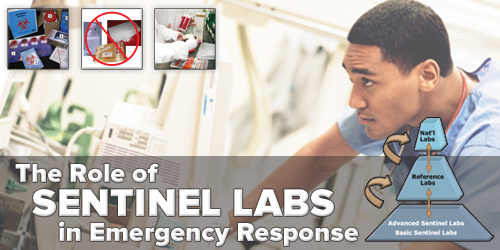
  • The Role of Sentinel Labs in Emergency Response

    The Role of Sentinel Labs in Emergency Response

    There are five sections in this course:

    • Section 1: The National Laboratory Response Network
    • Section 2: Basic and Advanced Sentinel Laboratories
    • Section 3: Role of Public Health Labs in Emergency Response
    • Section 4: Role of Sentinel Laboratories in a Bioterrorism Event
    • Section 5: Role of Sentinel Laboratories in a Chemical Event

    Modules 1 through 3 contain “pop quizzes” to assist you in understanding and assimilating the information. Module 4 and 5 contains scenario exercises to enable you to apply what you have learned to situations that may occur during a bioterrorism or chemical event.

    Intended Audience

    Individuals who work in a Sentinel Laboratory

    Learning Objectives:

    After completing this course, you will be able to:

    • Understand the Laboratory Response Network (LRN) architecture
    • Describe and define a Sentinel Laboratory
    • Understand the roles of basic and advanced Sentinel Laboratories in an emergency response
    • Identify and understand the use of available resources and reference materials relevant to Sentinel Laboratories during emergency response

    Pre-requisites/Learning Level

    No pre-requisites

    Competencies addressed

    Core Competencies for Public Health Professionals identified

    Domain 1: Analytical/Assessment Skills

    • 1A3. Applies ethical principles in accessing, collecting, analyzing, using, maintaining, and disseminating data and information
    • 1A4. Uses information technology in accessing, collecting, analyzing, using, maintaining, and disseminating data and information
    • 1A8. Collects valid and reliable quantitative and qualitative data

    Domain 5: Community Dimensions of Practice Skills

    • 5A5. Collaborates with community partners to improve health in a community (e.g., participates in committees, shares data and information, connects people to recources)

    CEUs Offered

    None

    Cost

    Free

    Modality/format

    Online Self-Pace

    Length

    1 hour

    Presenter(s) and/or Content Experts

    Technical requirements:

    • Adobe Acrobat Reader 
    • Flash Player 
    • Speakers

    Registration requirements

    Register a free account

    Creation and/or update

    July 30, 2013