Course Type: Course

  • Basic Epidemiology: Infectious Disease

    Basic Epidemiology: Infectious Disease

    There are four sections in this course:

    • Section 1: Epidemiology and Important Terms
    • Section 2: Models for Understanding the Infectious Process
    • Section 3: Epidemiology in Practice
    • Section 4: Surveillance

    There are review questions at the end of each section. These review questions will provide you with an opportunity to apply the knowledge and skills presented in these sections. In Section 3, you will have the opportunity to look at the case study of foodborne outbreak investigation.

    This course may be taken by itself, or as part of the New Public Health Administrators (NPHA) Curriculum.

    Intended Audience

    This course is intended for public health practitioners who do not have significant knowledge or experience in the field of epidemiology specifically for infectious disease.

    Learning Objectives:

    At the end of this course, you will be able to:

    • Discuss important terms and concepts for basic epidemiology practice.
    • Describe the inter-related aspects of the infectious disease process and methods of breaking the chain of infection.
    • Apply basic epidemiology in practice, using a case study of a food-borne outbreak as an example.
    • Perform basic surveillance tasks in an appropriate and timely manner.
    • Utilize your regional epidemiologist as a resource for outbreak investigations.

    Pre-requisites/Learning Level

    No pre-requisites

    Public Health Preparedness Capabilities

    • Capability 1: Community Preparedness
      • Function 4: Coordinate training or guidance to ensure community engagement in preparedness efforts.
    • Capability 13: Public Health Surveillance and Epidemiological Investigation
      • Function 1: Conduct public health surveillance and detection
      • Function 4: Improve public health surveillance and epidemiological investigation systems.

    Public Health Preparedness and Response Core Competencies

    • 1.1 Solve problems under emergency conditions.
      • 1.1.3 Prioritize problems based on level of hazard and degree of risk.
      • 1.1.8 Assess information, resources and procedures necessary to address the problems in emergency situations.
    • 1.4 Maintain situational awareness.
      • 1.4.3 Use information and resources that identify changes in the situation and/or response.
      • 1.4.7 Distinguish between critical and non-critical elements of the emergency.
    • 2.1 Manage information related to an emergency.
      • 2.1.5 Classify information for internal and external audiences.
    • 2.3 Report information potentially relevant to the identification and control of an emergency through the chain of command.
      • 2.3.2 Communicate within the organization’s defined command structure (i.e. report up, communicate down).
      • 2.3.5 Communicate relevant information to personnel in a timely fashion.
    • 2.4 Collect data according to protocol.
      • 2.4.1 Use standardized protocol to collect data.
      • 2.4.7 Organize data accurately into database or statistical packages.
      • 2.4.9 Utilize primary and secondary data collection methods to inform preparedness and emergency responses scenarios.
    • 2.5 Manage the recording and/or transcription of data according to protocol.
      • 2.5.1 Adhere to relevant ethics guidelines, state, and federal laws regarding data collection, management, and dissemination.

    Core Competencies for Public Health Professionals (Adopted Oct 21,2021 Version)

    Domain 1: Data Analytics and Assessment Skills

    1.8. Assesses community health status.

    Domain 6: Public Health Sciences Skills

    6.1. Describes systems, policies, and events impacting public health (e.g., slavery, colonialism, John Snow and the London cholera outbreak, smallpox eradication, development of vaccines, Tuskegee Syphilis Study, fluoridation of drinking water, Jim Crow laws, establishment of Medicare and Medicaid, Americans with Disabilities Act, seatbelt legislation, banning g tobacco in public buildings, death penalty, gun violence, globalization, deforestation, climate change, COVID-19 pandemic).

    6.2. Applies public health sciences (e.g., biostatistics, epidemiology, environmental health, health services administration, social and behavioral sciences, and public health informatics) in delivering the 10 Essential Public Health Services.

    6.3. Uses evidence in developing, implementing, evaluating, and improving policies, programs, and services.

    Certificate of Completion

    A certificate of completion is awarded on successful completion of this course. In order to successfully complete this course, you MUST score 70% or higher on the Posttest.

    If you do not receive 70% on the posttest, you may review the material and re-take the posttest.

    CEUs Offered

    None

    Cost

    Free

    Modality/format

    Online Self-Pace

    Length

    2 hours

    Course Redesign and Redevelopment

    Subject Matter Experts

    • Robert Niezgoda, MPH

    Instructional Designers & Developers

    • Alyssa Azhari

    Item Writer

    • Roger Hileman

    Audio/Video production & Narrator

    • Melissa Richlen

    LMS Coordinator

    • Tim Beachy

    Technical requirements

    • Adobe Acrobat Reader
    • Speakers or headphones

    Registration requirements

    Register a free account.

    Creation and/or update

    February 1, 2023

    Acknowledgments

    The following organizations collaborated on the development of this course: Iowa Department of Public Health (IDPH); University of Iowa College of Public Health, Institute for Public Health Practice (IPHP).

    IDPH Logo IPHP Logo
  • Changing Talk: Online (CHATO – LTSS)

    Changing Talk: Online (CHATO – LTSS)

    Goal

    The goal of this communication course is to increase awareness of the importance of effective communication with older adults and to use effective communication between staff and residents in nursing homes and other health care settings.

    Intended Audience

    The intended audience for this course is staff at nursing home facilities, independent and assistive living, and health care settings in the community that include registered nurses, nursing assistants, nursing home dieticians, direct care professionals, other administrations and support employees.

    Length

    The total program is approximately three hours and 15 minutes, split into three modules and the evaluation. Each module is approximately an hour, depending on the individual user. The evaluation is approximately 15 minutes. Upon completion of all three modules, the evaluation, and 70 percent on a posttest, a certificate of completion (three nursing contact hours) will be awarded.

    Content

    There are three modules in this course:

    • Module 1
      • This course contains information on the importance, benefits, and components of effective communication.
    • Module 2
      • This course contains information on some communication barriers and challenges, and effective and ineffective communication strategies.
    • Module 3
      • This course contains information on common problems during communication, guidelines for improving communication, and some characteristics of affirming communication.

    Learning Objectives

    After completing the CHATO program, participants will:

    1. Identify the importance of communication in nursing care of older adults.

    2. Identify barriers to communication in care of older adults.

    3. Distinguish effective and ineffective communication strategies.

    4. Identify elderspeak and its negative effects.

    5. Revise communication to reduce elderspeak and increase person-centered messages.

    Module 1

    Upon completion of this module, you will be able to:

    • Recognize the importance of communication to older adults.
    • Identify barriers to communication in care of older adults.
    • Distinguish between effective and ineffective communication strategies.
    Module 2

    Upon completion of this module, you will be able to:

    • Identify elderspeak and its potential negative messages.
    • Contrast effective and ineffective communication strategies.
    • Revise transcripts to reduce elderspeak and ineffective communication.
    Module 3

    Upon completion of this module, you will be able to:

    • Identify affirming communication. 
    • Critique communication in video recordings of nursing home staff-resident communication.
    • Rewrite transcripts to reduce elderspeak and ineffective communication. 

    The course content was presented by Dr. Kristine Williams (Dr. Williams’ Bio). There are learning activities, discussion forums, list of resources, posttest, and evaluations at the end of the course. The practice activities were designed to provide you with opportunities to apply the knowledge and skills presented in the course. Please take part in the discussion forum to share your experience and reflect on others.

    A Certificate of Completion is awarded on successful completion of this course. In order to successfully complete this course, you MUST: Score 70% or higher on the posttest. If you do not receive 70% on the posttest, you may review the material and re-take it.

    Approval Statement

    This continuing nursing professional development activity was approved by the Midwest Multistate Division, an accredited approver by the American Nurses Credentialing Center’s Commission on Accreditation. 

    Participant receives 3 contact hours for completing CHATO.

    Acknowledgements

    This work was supported by the National Institute of Nursing Research of the National Institutes of Health under Award Number R01NR011455, Changing Talk to Reduce Resistiveness to Dementia Care, K. Williams, PI. The content is solely the responsibility of the authors and does not necessarily represent the official views of the National Institutes of Health.

    We appreciate the expertise of The University of Iowa College of Nursing, and the Midwestern Public Health Training Center, University of Iowa College of Public Health (MPHTC–UICPH) for their help in converting the CHAT content into an interactive online format.

    Image/Video Credits:

    • Thinkstock
    • Lost for Words – Masterpiece Theater
    • Elizabeth Layton for “The Motherless Child” artwork/drawings – permission granted from Center on Aging, University of Kansas Medical Center.
    • Classroom teaching elderspeak cartoon by Tony Husband – permission granted from cartoons@tonyhusband.co.uk

    Special Thanks to the Nursing Home residents and staff who participated in video recordings and to Ruth Herman and Mary Suggs who participated as actresses.

    Conflict of Interest

    The planners and presenters have no conflicts of interest to declare.

      KansasLogo.png  

    Midwest MSD Approval Number:  KS523‐1376
    Contact hours for this program will not be awarded after May 15, 2023

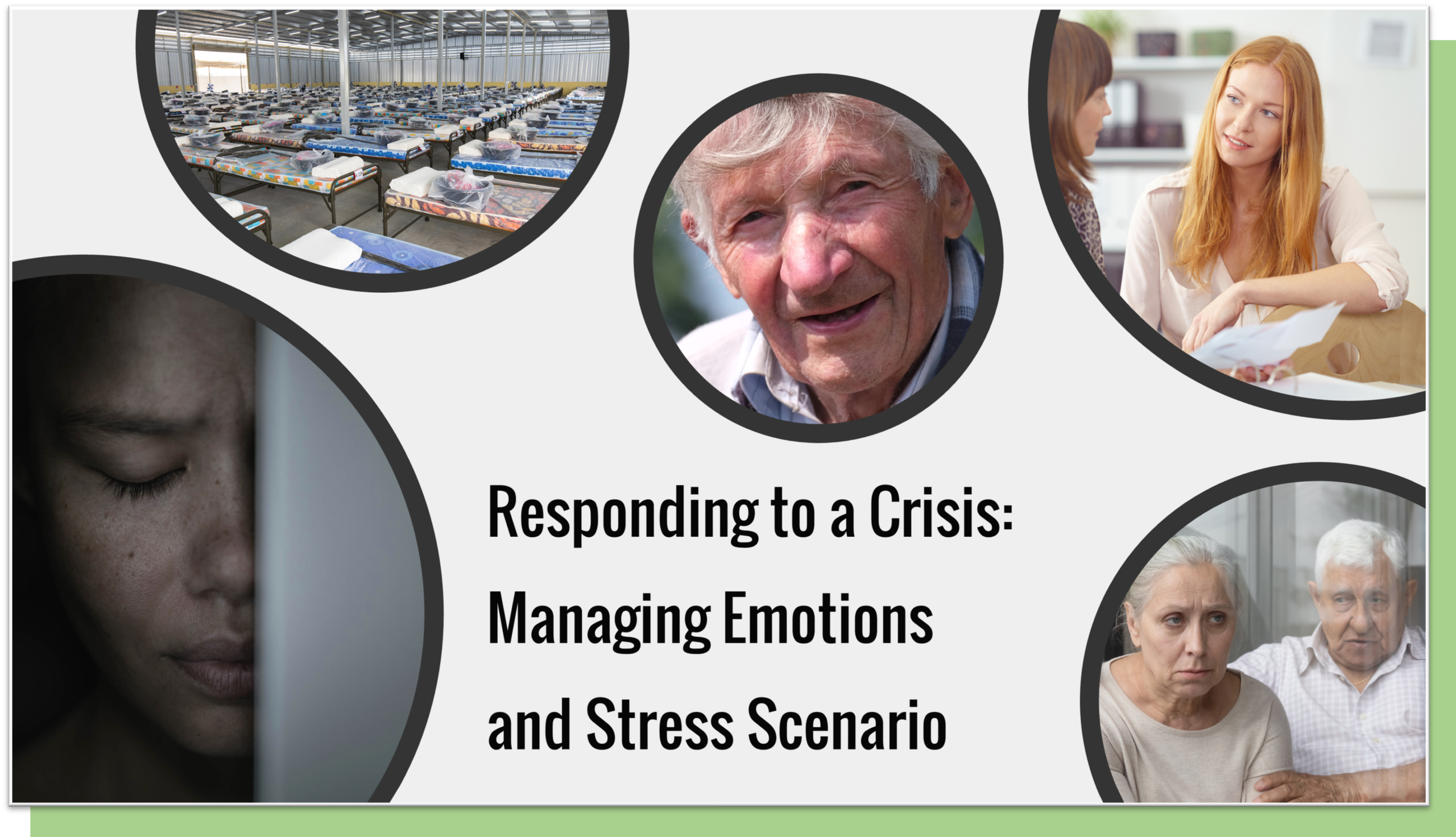
  • Responding to a Crisis: Managing Emotions and Stress Scenario

    Responding to a Crisis: Managing Emotions and Stress Scenario

    Course Overview

    Course Goal

    This course utilizes scenario-based learning to cover concepts of Psychological First Aid in responding to disasters. The learner makes decisions about how to respond to the emotional needs of disaster victims and volunteers. 

    Intended Audience

    This course is intended for the public health workforce, as well as anyone involved in post-disaster recovery.

    Length

    The length of time for participants to take this course is estimated to be one hour.

    Course Content & Navigation

    The course is set up as an interactive scenario. There are 4 sections of the course that need to be completed.  Users will be directed into a scenario and then asked to make decisions. When users make the correct decision, they will advance to a positive outcome. When users make an incorrect decision, they will face a negative outcome and receive the necessary training to make a better decision. They are then given another opportunity to make the right choice. Users must answer the question correctly in order to continue to the next section of the scenario. 

    Learning Objectives

    After completion of the course, learners should be able to:

    • Assess the psycho-physiological impact of trauma
    • Describe mental health interventions used during and in the immediate aftermath of a disaster in order to provide psychological stabilization
    • Determine who may benefit from mental health intervention
    • Administer mental health interventions to disaster victims as appropriate
    • Apply the screening and intervention concepts that occur in the immediate aftermath of the disaster.

    Certificate of Completion

    A certificate of completion is awarded on successful completion of this course. In order to successfully complete this course, you MUST score 70% or higher on the Posttest.

    If you do not receive 70% on the posttest, you may review the material and re-take it. The posttest will become available for a re-take 2 days after your first attempt.

    Modality/Format

    Online Self-Pace

    Pre-requisites/Learning Level

    No pre-requisites

    Public Health Preparedness Capabilities

    Capability 2: Community Recovery

    • Function 1: Identify and monitor public health, medical, mental/behavioral health system recovery needs.
    • Function 2: Coordinate community public health, medical, mental/behavioral health system recovery operations.

    PERLC Competencies

    Domain I: Model Leadership

    1.2 Manage behaviors associated with emotional responses in self and others.
    • Distinguish between the possible signs of personal stress, burn-out and vicarious trauma.
    • Applies techniques for maintaining awareness of possible signs of personal stress, burn-out, and vicarious trauma.
    • Applies intervention techniques to support emotional health needs.
    • Describe the importance of mitigating acute distress and fostering adaptive functioning and coping.
    • Demonstrate personal behavioral techniques for mitigating acute distress and fostering adaptive functioning and coping.
    • Discuss the elements of self-care principles and practices.
    • Use self-care principles and practices to mitigate potential adverse effects.
    • Demonstrate the ability to develop a helping relationship in support of the emotional health of others.
    • Demonstrate principles of active listening, express empathy and rapport. 
    • Behave in a positive non-judgmental and respectful manner.
    • Evaluate the emotional support needs of others.
    • Assess individuals requiring immediate care from those who need no care or delayed care.
    • Distinguish between well-functioning, distress and dysfunctional emotional responses. 
    • Describe mechanisms of liaison and advocacy and knowledge of referral resources.
    • Distinguish between the types of referrals needed for intensive care.
    • Express confidence in ability to make referrals, and serves as a liaison and advocate.

    Core Competencies for Public Health Professionals identified:

    Domain 2: Policy Development and Program Planning Skills

    T1: 2.2.5. Connects individuals to programs and services (e.g., helping individuals navigate systems, linking individuals to healthcare or social services)

    Technical Requirements

    • Adobe Acrobat Reader
    • Speaker/Earphones

    Registration Requirements

    Register a free account

    Course Redesign and Redevelopment (May 2023)

    Subject Matter Experts

    • Suzanne Hawley, PhD

    Instructional Designers & Developers

    • Alyssa Azhari

    Item Writer

    • Roger Hileman

    Audio/Video production

    • Melissa Richlen

    Narrator

    • Suzanne Hawley, PhD

    LMS Coordinator

    • Tim Beachy

    Course Creation and/or Update

    • May, 2023

    Need Assistance?

    If you need technical help, please Contact Us

    Acknowledgments

    The following organizations collaborated on the development of this course: Iowa Department of Public Health (IDPH); University of Iowa College of Public Health, Institute for Public Health Practice (IPHP). 

    IDPH Logo IPHP Logo


  • Ethics and Data Integrity for Technical Staff

    Ethics and Data Integrity for Technical Staff

    This online course discusses ethics and personal integrity and illustrates how these traits apply to technical staff in a public health or other laboratory. Examples of general workplace ethics are provided. Many of the ways that data integrity can be affected by technical staff are explained, from recognizing when sample integrity has been compromised to documenting errors, handling calibration and quality control issues, and changing or correcting results. Examples are given to show how improper practices and the failure to maintain data integrity can lead to fraud. One section of the course is dedicated to improper laboratory practices and how they can be avoided. Patient confidentiality, temperature records, altering SOPs, improper labeling, and failure to document are among the topics covered in this section. Another area focuses on issues of peak integration. The course ends with an in-depth look at chain-of-custody protocols as they apply to both clinical and environmental laboratories.. 

    Intended Audience

    This course is directed to technical staff at all levels in public health and other laboratories

    Learning Objectives:

    After completion of this course, the participant will be able to:

    • Define the terms commonly associated with ethics, data integrity, fraud and Chain of Custody
    • Recognize staff’s responsibility to conduct themselves ethically in the workplace
    • Describe the role of technical staff in maintaining data integrity
    • Describe and list examples of imposter practices
    • Explain the relationship of improper practices to fraud
    • Recognize the consequences of fraud
    • State the responsibilities of management and staff in preventing fraud
    • List actions that can affect sample integrity
    • Describe the Chain of Custody process for laboratory samples

    Pre-requisites/Learning Level

    No pre-requisites

    Competencies addressed

    Leadership and Systems Thinking Skills, communication Skills

    CEUs Offered

    None

    Cost

    Free

    Modality/format

    Online Self-Pace

    Length

    1 hour

    Presenter(s) and/or Content Experts

    Marcia Valbracht BS, MHA

    Technical requirements:

    • Adobe Acrobat Reader 
    • Speakers

    Registration requirements

    Register a free account

    Creation and/or update

    January 3, 2015

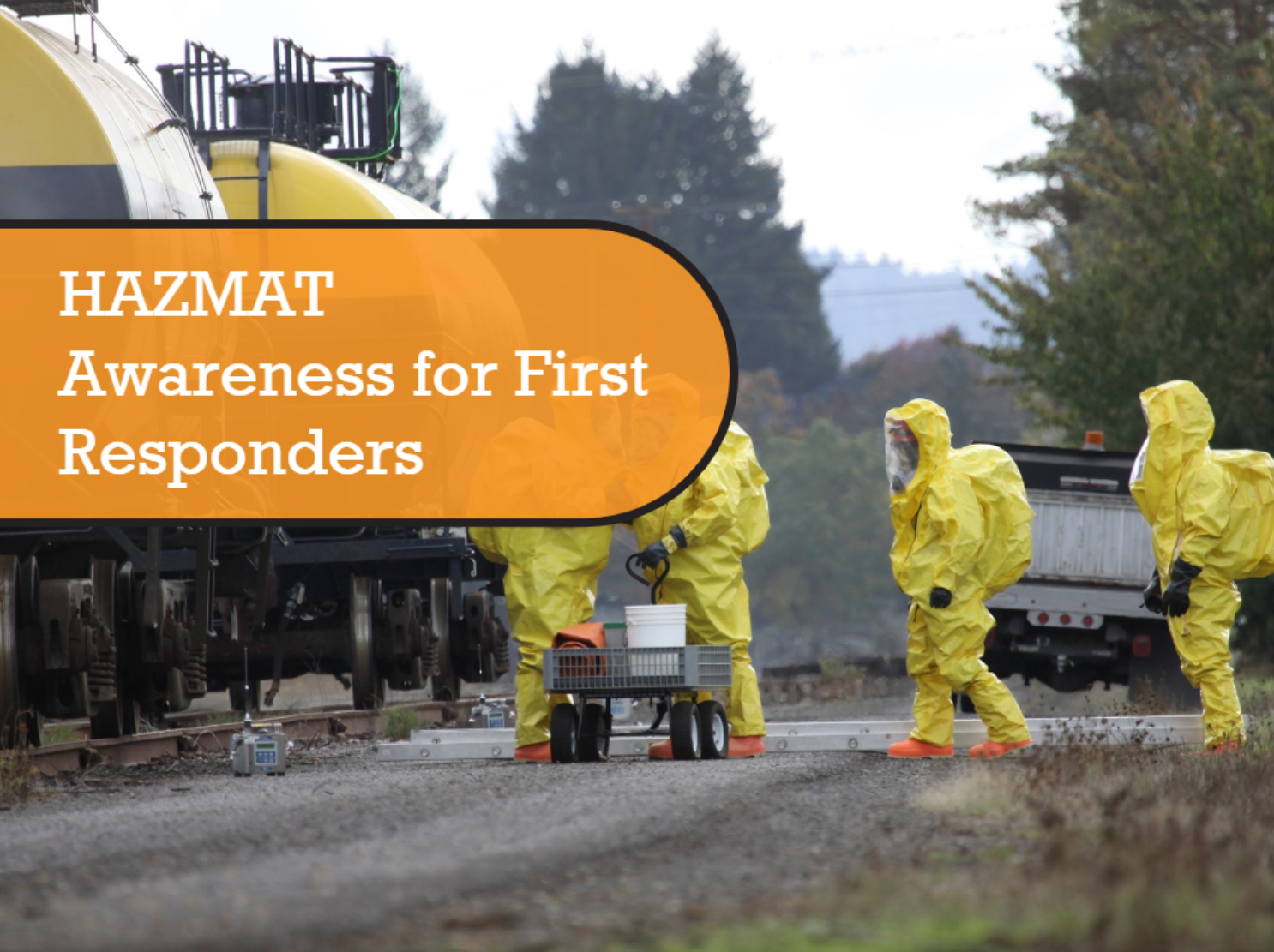
  • HAZMAT Awareness for First Responders

    HAZMAT Awareness for First Responders

    There are four sections in this course:

    • Section 1: Hospital ‘First Receivers’ and Contaminated Patients in the Hospital
    • Section 2: Recognizing Hazardous Substances in the Emergency Department
    • Section 3: Understanding The Hospital’s Response Plan & Your Role
    • Section 4: Common Hazardous Substances in Your Community

    There are review questions at the end of each section. These review questions will provide you with an opportunity to apply the knowledge and skills presented in these sections. There is a post-test at the end of the course. 

    A Certificate of Completion is awarded on successful completion of this course. 

    Intended Audience

    Health care workers in a hospital environment who may potentially have contact with a contaminated patient

    Learning Objectives:

    Upon completion of this part, you will be able to:

    • List four locations HAZMAT incidents occur
    • Use the APIE process during a HAZMAT incident
    • Utilize the Emergency Response Guidebook during a HAZMAT incident
    • Recognize various containers that may contain hazardous materials and list the types of materials most likely contained in them
    • Recognize and interpret DOT labels and placards used to mark hazardous materials in transit
    • Recognize and interpret NFPA labels used to mark hazardous materials in fixed sites

    Pre-requisites/Learning Level

    HAZMAT Awareness for Healthcare Providers

    Competencies addressed

    Core Competencies for Public Health Professionals

    Domain 1: Analytical/Assessment Skills

    • 1A1. Describes factors affecting the health of a community (e.g., equity, income, education, environment)
    • 1A12. Contributes to assessments of community health status and factors influencing health in a community (e.g., quality, availability, accessibility, and use of health services; access to affordable housing)

    CEUs Offered

    None

    Cost

    Free

    Modality/format

    Online Self-Pace

    Length

    1 hour

    Presenter(s) and/or Content Experts

    Technical requirements:

    • Adobe Acrobat Reader
    • Speakers or headphones

    Registration requirements

    Register a free account

    Content creation and/or update

    May 2023

  • HAZMAT for Healthcare Providers:  Awareness Level

    HAZMAT for Healthcare Providers: Awareness Level

    Goal

    The presence of hazardous materials in an Emergency Department is a risk to everyone – hospital personnel, patients and other people within the hospital. During HAZMAT incidents, hospital personnel should have two main goals:

    1. to protect both themselves and others from exposure to the hazardous material
    2. to provide the same level of care for the contaminated patient as any other patient

    This course is intended to help you respond to incidents involving hazardous materials in a way that meets these two goals.

    Intended Audience

    This course is intended for health care workers in a hospital environment who may potentially have contact with a contaminated patient.

    Public Health Preparedness Capabilities

    • Capability 1: Community Preparedness
      • Function 1: Determine risks to the health jurisdiction
    • Capability 2: Community Recovery
      • Function 1: Identify and monitor public health, medical, and mental/behavioral health system recovery needs.

    Public Health Preparedness and Response Core Competencies

    • 1.1 Solve problems under emergency conditions.
      • 1.1.1 Recognize emergency conditions and the resulting problems.
      • 1.1.2 Evaluate the level of hazard or risk.
      • 1.1.3 Prioritize problems based on level of hazard and degree of risk.
      • 1.1.17 Refer problems that fall outside his or her scope of authority to the appropriate person in the chain of command.
    • 1.3: Facilitate collaboration with internal and external emergency response partners.
      • 1.3.1 Compare the roles of relevant internal and external emergency response partners (including, but not limited to, agencies, organizations, authorities, elected leaders and stakeholders).
    • 1.4: Maintain situational awareness.
      • 1.4.3 Use information and resources to identify changes in the situation and/or response.
      • 1.4.7 Distinguish between critical and non-critical elements of the emergency in terms of the creation of situational awareness.
    • 1.6 Act within the scope of one’s legal authority.
      • 1.6.3 Access the emergency preparedness and response policies and procedures of one’s own organization.
      • 1.6.5 Document appropriate information relative to the application of the law.
    • 2.3 Report information potentially relevant to the identification and control of an emergency through the chain of command.
      • 2.3.2 Communicate within the organization’s defined command structure (i.e. report up, communicate down).
    • 2. 4 Collect data according to protocol.
      • 2.4.1 Use standardized protocol to collect data.
      • 2.4.2 Identify key local resources of data.
    • 2. 5 Manage the recording and /or transcription of data according to protocol.
      • 2.5.1 Adhere to relevant ethics guidelines, state and federal laws regarding data collection, management and dissemination.
    • 3.3 Participate in improving the organization’s capacities (including, but not limited to programs, plans, policies, laws and workforce training).
      • 3.3.3 Adapt skill sets to meet the needs during an emergency response situation.
      • 3.3.4 Apply knowledge and skills gained through participation in emergency preparedness and response activities to improve organization’s capacities.
      • 3.3.6 Prioritize critical emergency preparedness responsibilities in one’s own program.
    • 4.2: Employ protective behaviors according to changing conditions, personal limitations, and threats.
      • 4.2.2 Categorize potential threats and emergencies.
      • 4.2.3 Promote taking protective actions in response to current and changing threats
      • 4.2.12 12. Employ practices to minimize exposures to agents and hazards during an emergency.
    • 4.3: Report unresolved threats to physical and mental health through the chain of command.
      • 4.3.1 Discuss the types of physical hazards and resulting injuries one might encounter while performing their role during emergency planning and response.

    Core Competencies for Public Health Professionals (Adopted Oct 21,2021 Version)

    Domain 1: Data Analytics and Assessment Skills

    1.8.5 Identifies public health programs and organizations with authority to address specific community health needs (e.g., lead in housing, water fluoridation, bike lanes, emergency preparedness, infectious disease outbreaks)

    Course Content

    There are four sections in this course:

    1. First Receivers and Contaminated Patients in the Hospital
    2. Recognizing Hazardous Substances in The Emergency Department
    3. Understanding Your Role in The Response Plan 
    4. Recognizing Common Hazardous Substances 

    There are review questions at the end of each section. These review questions will provide you with an opportunity to apply the knowledge and skills presented in the course. 

    Learning Objectives

    After completing this course, you will be able to:

    • Distinguish between a “first responder” and a “first receiver”.
    • Describe how a HAZMAT incident evolves, and what a hospital emergency department can expect.
    • Recognize the presence of a hazardous material in the emergency department.
    • List the essential components of a HAZMAT response plan.
    • Analyze your facility’s HAZMAT policies/procedures and your role.
    • List important issues to consider when dealing with contaminated patients.
    • List the facts an emergency department needs to know about a HAZMAT incident in order to implement a response plan.
    • Identify which hazardous substances are most prevalent in Iowa and in your community.
    • Describe the following about the most prevalent hazardous substances: general signs and symptoms of exposure, and where they are typically found.

    Certificate of Completion

    A certificate of completion is awarded on successful completion of this course. In order to successfully complete this course, you MUST score 70% or higher on the Posttest.

    If you do not receive 70% on the posttest, you may review the material and re-take it. The posttest will become available for a re-take 2 days after your first attempt.

    Modality/Format

    Online Self-Pace

    Length

    1 hour

    CEUs Offered

    None

    Cost

    Free

    Technical Requirements

    • Adobe Acrobat Reader 
    • Speakers

    Course Redesign and Redevelopment (January 2023)

    Subject Matter Expert & Narrator

    • Douglas Rierson

    Instructional Designers & Developers

    • Christine McQuillan (Storyline)
    • Dena Fife
    • Alyssa Azhari (Moodle)

    Audio/Video Production

    • Melissa Richlen

    LMS Coordinator

    • Tim Beachy

    Course Creation and/or Update

    May 2023

    Acknowledgements

    The following organizations collaborated on the development of this course: Iowa Department of Public Health (IDPH); University of Iowa College of Public Health, Institute for Public Health Practice (IPHP).

    State of Iowa Department of Health and Human Services IPHP Logo

    Need Assistance?

    HELP_TEXT

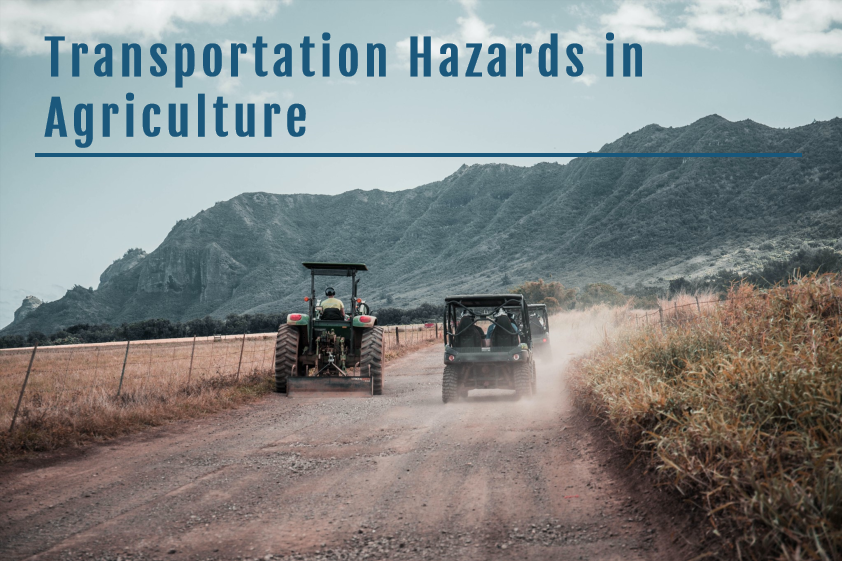
  • Transportation Hazards in Agriculture

    Transportation Hazards in Agriculture

    Goal

    The goal of Transportation Hazards in Agriculture is to provide an overview of transportation hazards in agriculture and understand how to minimize and prevent injuries.

    Intended Audience

    The intended audience for this course is rural health professionals.

    Length

    The length for this course is approximately 60 minutes depending on the individual user. Upon completion of the course, you will get a certificate of completion from the Great Plains Center of Agricultural Health at the University of Iowa College of Public
    Health.

    Prerequisite Requirement

    NA, however, it is advisable that you have some basic understanding of agricultural environment.

    Learning Objectives

    At the end of this course, you will be able to:

    • Describe how transportation hazards contribute to the overall burden of agricultural injuries.
    • Recognize factors that increase the probability of injury on a moving vehicle.
    • Apply controls to prevent injury.

    Core Competencies for Public Health Professionals

    Domain 3: Communication Skills

    • 3A2. Communicates in writing and orally with linguistic and cultural proficiency (e.g., using age-appropriate materials, incorporating images).

    Before you begin, please take the pretest. The
    pretest score will not be counted toward your final score.

    Content

    The content for this course is an overview of transportation hazards in the agriculture sector.

    The course includes a learning module with interactivity and scenario application activities, a list of resources, and a post-test at the end of this course. A Certificate of Completion is awarded on successful completion of this course. In order to successfully
    complete this course, you MUST score 70% or higher on the post-test. If you do not receive 70% on the post-test, you may review the material and re-take it.

    Continuing Education Credit

    This course has been approved for continuing education credit for the following professions (details available in course materials):

    • Nurse/Nurse Practitioner – ANCC contact hour(s)
    • Pharmacist/Pharmacy Technician – ACPE contact hour(s)
    • Physician – AMA PRA Category 1 Credit(s)
    • Other Health Care Providers – A certificate of participation stating the number of AMA PRA Category 1 Credit(s)™ the course awards will be available after successful completion of the course. (It is the responsibility of licensees to determine if
      this continuing education activity meets the requirements of their professional licensure board.)

    A separate registration process will be required after successful completion of the course.

    Acknowledgements

    The following organizations collaborated on the development of this course: The Great Plains Center for Agricultural Health and the Midwestern Public Health Training Center, University of Iowa College of Public Health (MPHTC–UICPH).

    This project is supported by Grant Number 5 U54 OH007548-11 from the CDC – NIOSH for the Agricultural Medicine Core Course (Diane Rohlman, PI) a project within the Great Plains Center for Agricultural Health (Renee Anthony, PI).  Course contents
    are solely the responsibility of the authors and do not necessarily represent the official views of the CDC or NIOSH.

    Development Team:

    Renée Anthony, PhD, CSP, CIH (primary content developer), Matt Nonnenmann PhD CIH, Diane Rohlman PhD, LaShelle Morrison MS, and Kay Mohling MA

    Photos
    provided by:
    Kentucky Fatality Assessment and Control Evaluation Program, Kentucky Injury Prevention and Research Center; Michigan Fatality Assessment and Control Evaluation Program, Michigan State University, Division of Occupational and Environmental
    Medicine; Shutterstock and Getty Images.

    Accessibility Statement

    Updated: May 2021

  • Changing Talk: Online (CHATO)

    Changing Talk: Online (CHATO)

    Goal

    The goal of this communication course is to increase awareness of the importance of effective communication with older adults and to use effective communication between staff and residents in nursing homes and other health care settings.

    Intended Audience

    The intended audience for this course is staff at nursing home facilities, independent and assistive living, and health care settings in the community that include registered nurses, nursing assistants, nursing home dieticians, direct care professionals, other administrations and support employees.

    Length

    The total program is approximately three hours and 15 minutes, split into three modules and the evaluation. Each module is approximately an hour, depending on the individual user. The evaluation is approximately 15 minutes. Upon completion of all three modules, the evaluation, and 70 percent on a posttest, a certificate of completion (three nursing contact hours) will be awarded.

    Content

    There are three modules in this course:

    • Module 1
      • This course contains information on the importance, benefits, and components of effective communication.
    • Module 2
      • This course contains information on some communication barriers and challenges, and effective and ineffective communication strategies.
    • Module 3
      • This course contains information on common problems during communication, guidelines for improving communication, and some characteristics of affirming communication.

    Learning Objectives

    After completing the CHATO program, participants will:

    1. Identify the importance of communication in nursing care of older adults.

    2. Identify barriers to communication in care of older adults.

    3. Distinguish effective and ineffective communication strategies.

    4. Identify elderspeak and its negative effects.

    5. Revise communication to reduce elderspeak and increase person-centered messages.

    Module 1

    Upon completion of this module, you will be able to:

    • Recognize the importance of communication to older adults.
    • Identify barriers to communication in care of older adults.
    • Distinguish between effective and ineffective communication strategies.
    Module 2

    Upon completion of this module, you will be able to:

    • Identify elderspeak and its potential negative messages.
    • Contrast effective and ineffective communication strategies.
    • Revise transcripts to reduce elderspeak and ineffective communication.
    Module 3

    Upon completion of this module, you will be able to:

    • Identify affirming communication. 
    • Critique communication in video recordings of nursing home staff-resident communication.
    • Rewrite transcripts to reduce elderspeak and ineffective communication. 

    The course content was presented by Dr. Kristine Williams (Dr. Williams’ Bio). There are learning activities, discussion forums, list of resources, posttest, and evaluations at the end of the course. The practice activities were designed to provide you with opportunities to apply the knowledge and skills presented in the course. Please take part in the discussion forum to share your experience and reflect on others.

    Approval Statement

    This nursing continuing professional development activity was approved by the Midwest Multistate Division, an accredited approver by the American Nurses Credentialing Center’s Commission on Accreditation.

    • To obtain nursing contact hours, you must view the entire program, pass the program posttest with a score of 70% or better and complete the evaluation.  You may take the posttest as many times as necessary to achieve the passing score.
    • No relevant financial relationships were identified for any member of the planning committee or any presenter/author of the program content.

     Midwest MSD Approval Number:  KS525-1438

    • Participant receives 3 contact hours for completing CHATO.
    • Contact hours for this program will not be awarded after May 15, 2025

    Acknowledgements

    This work was supported by the National Institute of Nursing Research of the National Institutes of Health under Award Number R01NR011455, Changing Talk to Reduce Resistiveness to Dementia Care, K. Williams, PI. The content is solely the responsibility of the authors and does not necessarily represent the official views of the National Institutes of Health.

    We appreciate the expertise of The University of Iowa College of Nursing, and the Midwestern Public Health Training Center, University of Iowa College of Public Health (MPHTC–UICPH) for their help in converting the CHAT content into an interactive online format.

    Image/Video Credits:

    • Thinkstock
    • Lost for Words – Masterpiece Theater
    • Elizabeth Layton for “The Motherless Child” artwork/drawings – permission granted from Center on Aging, University of Kansas Medical Center.
    • Classroom teaching elderspeak cartoon by Tony Husband – permission granted from cartoons@tonyhusband.co.uk

    Special Thanks to the Nursing Home residents and staff who participated in video recordings and to Ruth Herman and Mary Suggs who participated as actresses.

      KansasLogo.png  

    Midwest MSD Approval Number:  KS523‐1376
    Contact hours for this program will not be awarded after May 15, 2023

  • Biological Risk Management

    Biological Risk Management

    The goal of Biological Risk Management (BRM) is to introduce the concept of BRM, disease transmission, and how to minimize the risk of disease.

    Intended Audience

    The intended audience for this course is rural health professionals.

    Length

    The length for this course is approximately 60 minutes depending on the individual user. Upon completion of the course, you will get a certificate of completion from the Great Plains Center of Agricultural Health at the University of Iowa College of Public
    Health.

    Prerequisite Requirement

    NA, however, it is advisable that you have some basic understanding of agricultural environment.

    Learning Objectives

    At the end of this course, you will be able to:

    • Describe
      the principles of Biological Risk Management including risk perception, risk assessment, risk management, and risk communication.
    • Recognize routes of disease transmission to animal and human populations.
    • List methods of communicating disease risk
    • Apply appropriate disease prevention practices.

    Core Competencies for Public Health
    Professionals

    • Domain 3: Communication Skills
      • 3A2. Communicates in writing and orally with linguistic and cultural proficiency (e.g., using age-appropriate materials, incorporating images).

    Before you begin, please take the pretest. The
    pretest score will not be counted toward your final score.

    Content

    The content for this course is an overview of agricultural safety in the agriculture, forestry, and fishing sector.

    The course includes a learning module with interactivity and scenario application activities, a list of resources, and a posttest at the end of this course. A Certificate of Completion is awarded on successful completion of this course. In order to successfully
    complete this course, you MUST score 70% or higher on the posttest. If you do not receive 70% on the posttest, you may review the material and re-take it.

    Continuing Education Credit

    This course has been approved for continuing education credit for the following professions (details available in course materials):

    • Nurse/Nurse Practitioner – ANCC contact hour(s)
    • Pharmacist/Pharmacy Technician – ACPE contact hour(s)
    • Physician – AMA PRA Category 1 Credit(s)
    • Other Health Care Providers – A certificate of participation stating the number of AMA PRA Category 1 Credit(s)™ the course awards will be available after successful completion of the course. (It is the responsibility of licensees to determine if
      this continuing education activity meets the requirements of their professional licensure board.)

    A separate registration process will be required after successful completion of the course.

    Acknowledgements

    The following organizations collaborated on the development of this course: The Great Plains Center for Agricultural Health and the Midwestern Public Health Training Center, University of Iowa College of Public Health (MPHTC–UICPH).

    This project is supported by Grant Number 5 U54 OH007548-11 from the CDC – NIOSH for the Agricultural Medicine Core Course (Diane Rohlman, PI) a project within the Great Plains Center for Agricultural Health (Renee Anthony, PI).  Course contents
    are solely the responsibility of the authors and do not necessarily represent the official views of the CDC or NIOSH.

  • Eating Healthy on the Job

    Eating Healthy on the Job

    The goal of this course is to provide workers strategies for healthy eating. Topics include the importance of eating a balanced diet and staying hydrated, how to eat healthy on a budget, and how to protects yourself from foodborne diseases. 

    Intended Audience 

    The intended audience for this course is workers in the construction industry. 

    Length 

    The length for this course is approximately 40 minutes depending on the individual user. Upon completion of the course, you will get a certificate of completion from the Oregon Bureau of Labor and Industries, Apprenticeship and Training Division, the Oregon Department of Transportation, Office of Civil Rights, and the Healthier Workforce Center of the Midwest at the University of Iowa College of Public Health. 

    Prerequisite Requirement 

    NA

    Core Competencies for Public Health Professionals

    Domain 3: Communication Skills

    • 3A2. Communicates in writing and orally with linguistic and cultural proficiency (e.g., using age-appropriate materials, incorporating images).

    Learning Objectives

    At the end of this course, you will be able to:

    • Describe how nutrition can impact workplace safety and health.
    • Recognize how poor nutrition puts workers at risk for injury on the job.
    • Apply strategies for healthy eating to your daily life.

    Before you begin, please take the pretest. The pretest score will not be counted toward your final score.

    Content

    The content for this course is strategies for healthy eating on the job.

    The course includes a learning module with interactivity and scenario application activities, a list of resources, and a posttest at the end of this course.

    A Certificate of Completion is awarded on successful completion of this course. In order to successfully complete this course, you MUST score 70% or higher on the posttest. If you do not receive 70% on the posttest, you may review the material and re-take it.

    Acknowledgements

    The following organizations collaborated on the development of this course:

    • The Oregon Bureau of Labor and Industries, Apprenticeship and Training Division
    • Oregon Department of Transportation, Office of Civil Rights
    • Healthier Workforce Center of the Midwest, University of Iowa College of Public Health

    This project is supported by Intergovernmental Agreement BOLI-ODOT 2016-103 from the Oregon Bureau of Labor and Industries, Apprenticeship and Training Division and the Oregon Department of Transportation, Office of Civil Rights.

    Accessibility Statement

    The Midwestern Public Health Training Center (MPHTC) website has a goal of conforming to the Web Content Accessibility Guidelines 2.0 of the World Wide Web Consortium. These guidelines explain how to make web content more accessible for people with disabilities.

    The MPHTC site is built using HTML and CSS code compliant with World Wide Web Consortium standards. The site displays correctly in current browsers and should also display correctly in future browsers.

    While we strive to make sure our entire site is compliant, we realize that not all areas of the site will be completely accessible. If you have trouble accessing an area of our site, please contact the MPHTC webmaster at help@training-source.org for assistance.

    Contact help@training-source.org