Course Type: Course

  • HAZMAT for Healthcare Providers:  Operations Level

    HAZMAT for Healthcare Providers: Operations Level

    Course Overview

    Goal/Intended Audience

    This course is intended for health care workers in a hospital environment who may need to respond to an incident involving a contaminated patient on the operations level.

    Prerequisite

    HAZMAT Awareness for Healthcare Providers is a prerequisite for this course.

    Capabilities identified:

    • Capability 2: Community Recovery
      • Function 1: Identify and monitor public health, medical, and mental/behavioral health system recovery needs.
      • Function 2: Coordinate community public health, medical, and mental/behavioral health system recovery operations.
      • Function 3: Implement corrective actions to mitigate damages from future incidents.
    • Capability 6: Information Sharing
      • Function 1: Identify stakeholders to be incorporated into information flow.
    • Capability 7: Mass Care
      • Function 3: Coordinate public health, medical, and mental/behavioral health services.
    • Capability 14: Responder Safety and Health
      • Function 2: Identify safety and personal protective needs.

    Competencies identified:

    • 1.1 Solve problems under emergency conditions.
      • 1.1.1 Recognize emergency conditions and the resulting problems.
      • 1.1.2 Evaluate the level of hazard or risk.
      • 1.1.3 Prioritize problems based on level of hazard and degree of risk.
      • 1.1.7 Prioritize problems based on severity, urgency, and solubility.
      • 1.1.8 Assess information, resources and procedures necessary to address the problems in emergency situations.
      • 1.1.9 Implement action to solve the problem(s) in a timely fashion.
    • 1.2 Manage behaviors associated with emotional responses in self and others.
      • 1.2.2 Applies techniques for maintaining awareness of possible signs of personal stress, burn-out, and vicarious trauma.
      • 1.2.7 Use self care principles and practices to mitigate potential adverse effects.
      • 1.2.8 Demonstrate the ability to develop a helping relationship in support of the emotional health of others.
      • 1.2.12 Assess individuals requiring immediate care from those who need no care or delayed care.
    • 1.3: Facilitate collaboration with internal and external emergency response partners.
      • 1.3.3 Develop collaborative emergency response plans and/or policies with appropriate internal and external emergency response partners.
      • 1.3.4 Apply communication strategies to effectively communicate with internal and external response partners.
    • 1.4: Maintain situational awareness.
      • 1.4.3 Use information and resources to identify changes in the situation and/or response.
      • 1.4.4 Detect cues that the situation may be rapidly changing.
      • 1.4.9 Develop a method for realigning response actions as crisis events evolve.
      • 1.4.17 Distinguish between existing and future needs in response environments.
    • 1.6: Act within the scope of one’s legal authority.
      • 1.6.2 Apply appropriate public health authority to minimize adverse outcomes (e.g., persons, property, etc.)
      • 1.6.3 Access the emergency preparedness and response policies and procedures of one’s own organization.
      • 1.6.5 Document appropriate information relative to the application of the law.
    • 2.3: Report information potentially relevant to the identification and control of an emergency through the chain of command.
      • 2.3.2 Communicate within the organization’s defined command structure (i.e. report up, communicate down).
      • 2.3.5 Communicate relevant information with to personnel in a timely fashion.
    • 2. 5 Manage the recording and /or transcription of data according to protocol.
      • 2.5.1 Adhere to relevant ethics guidelines, state and federal laws regarding data collection, management and dissemination.
    • 3.3 Participate in improving the organization’s capacities (including, but not limited to programs, plans, policies, laws and workforce training).
      • 3.3.3 Adapt skill sets to meet the needs during an emergency response situation.
      • 3.3.4 Apply knowledge and skills gained through participation in emergency preparedness and response activities to improve organization’s capacities.
    • 4.2: Employ protective behaviors according to changing conditions, personal limitations, and threats.
      • 4.2.1 Discuss the need to protect worker health and safety in emergencies and disasters.
      • 4.2.12 Employ practices to minimize exposures to agents and hazards during an emergency.
      • 4.2.14 Demonstrate personal hygiene practices that minimize exposure to chemical, biological, or radiological agents that may be present during emergencies and disasters.
      • 4.2.16 Demonstrate correct donning of chemical protective clothing, respiratory protection, protective eyewear, protective footwear, hearing protection, gloves, and any other assigned PPE.
      • 4.2.17 Apply the proper methods to maintain, store, decontaminate and dispose of different types of PPE.
    • 4.3: Report unresolved threats to physical and mental health through the chain of command.
      • 4.3.1 Discuss the types of physical hazards and resulting injuries one might encounter while performing their role during emergency planning and response.
      • 4.3.5 Report unresolved physical and/or mental health threats through the chain of command.

    Core Competencies for Public Health Professionals identified:

    Domain 1: Data Analytics and Assessment Skills

    1.8.5 Identifies public health programs and organizations with authority to address specific community health needs (e.g., lead in housing, water fluoridation, bike lanes, emergency preparedness, infectious disease outbreaks)

    Course Content

    There are four modules in this course:

    1. Toxicology and Health Safety Basics
    2. Reference Materials
    3. Personal Protective Equipment for First Receivers
    4. Decontamination of Exposed Patients

    There are review questions at the end of each module. These review questions will provide you with an opportunity to apply the knowledge and skills presented in the module. In addition, some modules contain practice exercises.

    Learning Objectives

    After completing this course, you will be able to:

    • Describe toxicity and relative toxicity.
    • Define common terms (i.e. IDLH, TLV-C) used to measure toxicity and exposure limits.
    • List the four major routes of entry of toxic chemicals and describe factors that affect absorption for each.
    • Describe measures to avoid secondary contamination.
    • Use reference materials to obtain information about a toxic chemical in order to treat patients and maintain safety of self and others.
    • List the steps for donning and doffing PPE.
    • List the steps for assembling and disassembling a decontamination shower.
    • Utilize manufacturer instructions for the proper care and maintenance of PPE.
    • Recognize circumstances under which you can or cannot rely on your PPE for protection.
    • List the steps for decontaminating ambulatory and non-ambulatory patients.

    Certificate of Completion

    A certificate of completion is awarded on successful completion of this course. In order to successfully complete this course, you MUST score 70% or higher on the Posttest.

    If you do not receive 70% on the posttest, you may review the material and re-take it. The posttest will become available for a re-take 2 days after your first attempt.

    Modality/Format

    Online Self-Pace

    Length

    1 hour

    Technical Requirements

    • Adobe Acrobat Reader 
    • Speakers

    Course Redesign and Redevelopment (May 2023)

    Subject Matter Expert & Narrator

    • Douglas Rierson

    Instructional Designers & Developers

    • Christine McQuillan
    • Dena Fife
    • Alyssa Azhari

    Audio/Video Production

    • Melissa Richlen

    LMS Coordinator

    • Tim Beachy

    Course Creation and/or Update

    May 2023

    Technical requirements:

    • Adobe Acrobat Reader 
    • Headphones or Speakers

    Registration requirements

    Register a free account

    Acknowledgements

    The following organizations collaborated on the development of this course: Iowa Department of Public Health (IDPH); University of Iowa College of Public Health, Institute for Public Health Practice (IPHP).

    State of Iowa Department of Health and Human Services IPHP Logo

    Need Assistance?

    If you need technical help, please Contact Us

  • Learn about the ADRC Network Modules

    Learn about the ADRC Network Modules

    Learn about the offerings of ADRC: 

    AAAs, CILs, MHDS, Assistive Tech (Easterseals IA), Evidence-based hub (CHP Communities), Disability Rights Iowa, Community Action Programs, Mobility Managers, Legal Aid

  • Effect of Disasters on Mental Health for Children and Adolescents

    Effect of Disasters on Mental Health for Children and Adolescents

    This course covers the following topics: 

    • Risk Factors
    • Psychological First Aid for Children and Adolescents
    • What Parents Can Do to Help
    • Common Reactions of Children and Adolescents to Traumatic Stress
    • Pathological Reactions of Children and Adolescents to Traumatic Stress
    • Treatment Options

    Throughout the course you will have the opportunity to participate in a scenario-based activity, in which you will apply the knowledge you have attained.

    Intended Audience

    anyone who will come into professional contact with disaster victims who are children or adolescents, including DMAT, hospital workers, EMTs, primary care providers and public health workers

    Learning Objectives:

    After completing this course, you will be able to:

    • Recognize the risk factors involved for a child or adolescent developing mental health problems as a result of exposure to disaster
    • Recognize symptoms of acute psychological distress in children or adolescents
    • Administer ”psychological first aid” to children and adolescents to provide them with stabilization during and in the immediate aftermath of a traumatic event
    • Describe how 4 major components in the psycho-physiological response to trauma (somatic, emotional, behavioral, and cognitive) manifest themselves in pre-school children, older children, and adolescents
    • Advise parents/caregivers what they do to help prevent their child or adolescent from developing mental health problems after a traumatic event
    • Distinguish between a normal and pathological reaction to disaster trauma in children and adolescents
    • Discuss treatment options for children and adolescents who develop mental health disorders

    Pre-requisites/Learning Level

    No pre-requisites

    Competencies addressed

    Core Competencies for Public Health Professionals identified

    Domain 4: Cultural Competency Skills

    • 4A5. Addresses the diversity of individuals and populations when implementing policies, programs, and services that affect the health of a community

    CEUs Offered

    None

    Cost

    Free

    Modality/format

    Online Self-Pace

    Length

    1 hour

    Presenter(s) and/or Content Experts

    Technical requirements:

    • Adobe Acrobat Reader 
    • Speakers or headphones

    Registration requirements

    Register a free account

    Creation and/or update

    April 2022

  • Effect of Disasters on Mental Health: Technical Level

    Effect of Disasters on Mental Health: Technical Level

    Course Summary

    There are three modules in this course:

    • Section 1: Assessment and Intervention in the Immediate Aftermath of a Disaster
    • Section 2: Assessment and Intervention in the Weeks/Months after the Disaster
    • Section 3: Cultural Awareness

    There are review questions at the end of each section. These review questions will provide you with an opportunity to apply the knowledge and skills presented in these sections. In addition, some sections contain practice exercises to help you better understand the material.

    Intended Audience

    Anyone who will come into professional contact with disaster victims, including DMAT, hospital workers, EMTs, primary care providers and public health workers

    Learning Objectives

    Upon completing this course, you will be able to:

      • Assess the psycho-physiological impact of trauma.
      • Describe mental health interventions used during and in the immediate aftermath of a disaster in order to provide psychological stabilization.
      • Determine who may benefit from mental health intervention.
      • Administer mental health interventions to disaster victims as appropriate.
      • Distinguish between a normal and pathological reaction to disaster trauma.
      • Describe the most common mental health disorders associated with disaster trauma.
      • Establish a preliminary assessment for the most common mental health disorders.
      • Employ an interview technique that is both effective and responsive to the needs of the patient.
      • Discuss treatment options for these mental health disorders.
      • Identify the role of cultural elements in addressing mental health problems.
      • Utilize appropriate methods for interacting with culturally diverse populations in the context of a disaster response.

    Pre-requisites/Learning Level

    Effect of Disasters on Mental Health: Awareness Level

    Competencies addressed

    Core Competencies for Public Health Professionals identified:

    Domain 4: Cultural Competency Skills

    • 4A3. Describes the ways diversity may influence policies, programs, services, and the health of a community
    • 4A5. Addresses the diversity of individuals and populations when implementing policies, programs, and services that affect the health of a community

    CEUs Offered

    None

    Cost

    Free

    Modality/format

    Online Self-Pace

    Length

    1 hour

    Presenter(s) and/or Content Experts

    Technical requirements

    • Adobe Acrobat Reader 
    • Speakers or headphones

    Registration requirements

    Register a free account

    Creation and/or update

    June 2022

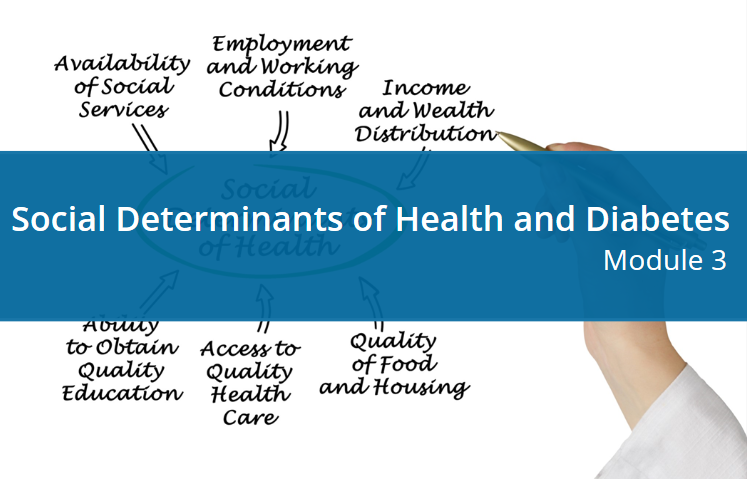
  • Module 3: Social Determinants of Health and Diabetes – ADRC

    Module 3: Social Determinants of Health and Diabetes – ADRC

    Prevention and Management of Diabetes:  Current Community-Based Strategies


    Keywords

    Diabetes, Diabetes Prevention, Diabetes Management, Diabetes Prevention Program, Community-Based Agencies, Social Determinants of Health

    Descriptions

    This series will include five online modules which provide learners a comprehensive, awareness-level understanding of diabetes, to enable them to effectively support, advise, and monitor programs, and services provided through community-based agencies, including Federally-Qualified Health Centers (FQHCs).  This series includes five training modules with each has their own set of pre and posttest questions.

    • Module 1 – Diabetes: The Basic Questions and Answers
    • Module 2 – A Closer Look at Diabetes
    • Module 3 – Social Determinants of Health and Diabetes
    • Module 4 – Prediabetes: The Crisis We can Prevent
    • Module 5 – Improving Diabetes Care and Outcomes

    Learners will have flexibility to take the modules in whatever sequence they want, but the above sequence is recommended. Throughout the modules, learners will be introduced with fictional characters that may or may not have diabetes.

    Type of Training

    Online Self-Paced

    Intended Audience

    The intended audience for this course is anyone who would like to increase their knowledge of diabetes and diabetes prevention and control.

    Length of Training

    30 to 45 minutes for each module

    Learning Objectives

    At the end of each module, learners will be able to:

    Module 3

    • Describe the social determinants of health that impact diabetes
    • Explain the factors that impact disease management and social determinants of health
    • Describe why lack of access to healthy options can influence healthy decision making
    • Discuss policy interventions which address social determinants contributing to diabetes

    Core Competencies for Public Health Professionals

    Domain: Public Health Science Skills – Tier 1

    6A6: Describes evidence used in developing, implementing, evaluating, and improving policies, programs, and services

    6A8: Contributes to the public health evidence base (e.g., participating in Public Health Practice-Based Research Networks, community-based participatory research, and academic health departments; authoring articles; making data available to researchers)

    Domain: Leadership and Systems Thinking Skills – Tier 1

    8A3: Describes the ways public health, health care, and other organizations can work together or individually to impact the health of a community

    8A4: Contributes to development of a vision for a healthy community (e.g., emphasis on prevention, health equity for all, excellence and innovation)

    Pre-requisites (Learning level)

    None

    CEUS Offered

    None

    Certificate of Completion

    Certificate of Completion for each module will be awarded on successful completion of this module which is getting a score of 70% or higher on the posttest.

    Cost

    Free

    Technical Requirements

    In order to successfully view the module in this series, please note the following requirements.

    • Windows computer/laptop: 
      • Any modern, updated browser (i.e. Google Chrome, Firefox, Edge)
      • Mac computer/laptop: Safari 7 and later, Google Chrome (latest version)
      • Apple iOS: Safari in Apple iOS 7 and later
      • Android OS: Google Chrome (latest version) in Android OS 4.1 and later
      • Screen Reader: JAWS 16 or later with Internet Explorer 11 or later
      • Speaker or headphone – the modules have audio

    Acknowledgements

    The following organizations collaborated on the development of this course: Health Resources & Service Administration (HRSA), Region 7 Midwestern Public Health Training Center (MPHTC); and the University of Iowa College of Public Health Institute for Public Health Practice (UICPH-IPHP).

    Course Design & Development

    Deputy Director, Strategic Partnerships Division, Office of Quality Improvement Bureau of Primary Health Care, Health Resources and Services Administration: Julia Sheen-Aaron, MPH

    Subject Matter Experts: Shirley Orr, MHS, APRN, NEA-BC

    MPHTC Coordinator: Laurie Walkner, MA

    Instructional Designers and Storyline Developers: Dena Fife, MA and Nor Hashidah Abd Hamid, PhD

    Item Writer: Roger Hileman, MA

    Narrators: Melissa Richlen and Brett Borden

    Audio/Video Productions: Melissa Richlen, BA

    LMS Coordinator: Tim Beachy, BA

    Communication Specialist: Hannah Morrison Shultz, MA

    Creation Date: November 1st, 2019

  • Module 4: Prediabetes: The Crisis We Can Prevent – ADRC

    Module 4: Prediabetes: The Crisis We Can Prevent – ADRC

    Prevention and Management of Diabetes:  Current Community-Based Strategies


    Keywords

    Diabetes, Diabetes Prevention, Diabetes Management, Diabetes Prevention Program, Community-Based Agencies, Social Determinants of Health

    Descriptions

    This series will include five online modules which provide learners a comprehensive, awareness-level understanding of diabetes, to enable them to effectively support, advise, and monitor programs, and services provided through community-based agencies, including Federally-Qualified Health Centers (FQHCs).  This series includes five training modules with each has their own set of pre and posttest questions.

    • Module 1 – Diabetes: The Basic Questions and Answers
    • Module 2 – A Closer Look at Diabetes
    • Module 3 – Social Determinants of Health and Diabetes
    • Module 4 – Prediabetes: The Crisis We can Prevent
    • Module 5 – Improving Diabetes Care and Outcomes

    Learners will have flexibility to take the modules in whatever sequence they want, but the above sequence is recommended. Throughout the modules, learners will be introduced with fictional characters that may or may not have diabetes.

    Type of Training

    Online Self-Paced

    Intended Audience

    The intended audience for this course is anyone who would like to increase their knowledge of diabetes and diabetes prevention and control.

    Length of Training

    30 to 45 minutes for each module

    Learning Objectives

    At the end of each module, learners will be able to:

    Module 4

    • Recognize the impact prediabetes has the American population
    • Explain the testing methods to identify prediabetes
    • Discuss the prevention strategies for prediabetes
    • Analyze the prevention strategies for Tony’s case based on the scenario presented

    Core Competencies for Public Health Professionals

    Domain: Public Health Science Skills – Tier 1

    6A6: Describes evidence used in developing, implementing, evaluating, and improving policies, programs, and services

    6A8: Contributes to the public health evidence base (e.g., participating in Public Health Practice-Based Research Networks, community-based participatory research, and academic health departments; authoring articles; making data available to researchers)

    Domain: Leadership and Systems Thinking Skills – Tier 1

    8A3: Describes the ways public health, health care, and other organizations can work together or individually to impact the health of a community

    8A4: Contributes to development of a vision for a healthy community (e.g., emphasis on prevention, health equity for all, excellence and innovation)

    Pre-requisites (Learning level)

    None

    CEUS Offered

    None

    Certificate of Completion

    Certificate of Completion for each module will be awarded on successful completion of this module which is getting a score of 70% or higher on the posttest.

    Cost

    Free

    Technical Requirements

    In order to successfully view the module in this series, please note the following requirements.

    • Windows computer/laptop: 
      • Any modern, updated browser (i.e. Google Chrome, Firefox, Edge)
      • Mac computer/laptop: Safari 7 and later, Google Chrome (latest version)
      • Apple iOS: Safari in Apple iOS 7 and later
      • Android OS: Google Chrome (latest version) in Android OS 4.1 and later
      • Screen Reader: JAWS 16 or later with Internet Explorer 11 or later
      • Speaker or headphone – the modules have audio

    Acknowledgements

    The following organizations collaborated on the development of this course: Health Resources & Service Administration (HRSA), Region 7 Midwestern Public Health Training Center (MPHTC); and the University of Iowa College of Public Health Institute for Public Health Practice (UICPH-IPHP).

    Course Design & Development

    Deputy Director, Strategic Partnerships Division, Office of Quality Improvement Bureau of Primary Health Care, Health Resources and Services Administration: Julia Sheen-Aaron, MPH

    Subject Matter Experts: Shirley Orr, MHS, APRN, NEA-BC

    MPHTC Coordinator: Laurie Walkner, MA

    Instructional Designers and Storyline Developers: Dena Fife, MA and Nor Hashidah Abd Hamid, PhD

    Item Writer: Roger Hileman, MA

    Narrators: Melissa Richlen and Brett Borden

    Audio/Video Productions: Melissa Richlen, BA

    LMS Coordinator: Tim Beachy, BA

    Communication Specialist: Hannah Morrison Shultz, MA

    Creation Date: November 1st, 2019

  • Module 5: Improving Diabetes Care and Outcomes – ADRC

    Module 5: Improving Diabetes Care and Outcomes – ADRC

    Prevention and Management of Diabetes:  Current Community-Based Strategies


    Keywords

    Diabetes, Diabetes Prevention, Diabetes Management, Diabetes Prevention Program, Community-Based Agencies, Social Determinants of Health

    Descriptions

    This series will include five online modules which provide learners a comprehensive, awareness-level understanding of diabetes, to enable them to effectively support, advise, and monitor programs, and services provided through community-based agencies, including Federally-Qualified Health Centers (FQHCs).  This series includes five training modules with each has their own set of pre and posttest questions.

    • Module 1 – Diabetes: The Basic Questions and Answers
    • Module 2 – A Closer Look at Diabetes
    • Module 3 – Social Determinants of Health and Diabetes
    • Module 4 – Prediabetes: The Crisis We can Prevent
    • Module 5 – Improving Diabetes Care and Outcomes

    Learners will have flexibility to take the modules in whatever sequence they want, but the above sequence is recommended. Throughout the modules, learners will be introduced with fictional characters that may or may not have diabetes.

    Type of Training

    Online Self-Paced

    Intended Audience

    The intended audience for this course is anyone who would like to increase their knowledge of diabetes and diabetes prevention and control.

    Length of Training

    30 to 45 minutes for each module

    Learning Objectives

    At the end of each module, learners will be able to:

    Module 5

    • Discuss ways on improving diabetes care and self-management
    • Describe the elements of the Chronic Care Model in improving patient and system outcomes
    • Explain emerging practices that could be adopted in your own practice

    Core Competencies for Public Health Professionals

    Domain: Public Health Science Skills – Tier 1

    6A6: Describes evidence used in developing, implementing, evaluating, and improving policies, programs, and services

    6A8: Contributes to the public health evidence base (e.g., participating in Public Health Practice-Based Research Networks, community-based participatory research, and academic health departments; authoring articles; making data available to researchers)

    Domain: Leadership and Systems Thinking Skills – Tier 1

    8A3: Describes the ways public health, health care, and other organizations can work together or individually to impact the health of a community

    8A4: Contributes to development of a vision for a healthy community (e.g., emphasis on prevention, health equity for all, excellence and innovation)

    Pre-requisites (Learning level)

    None

    CEUS Offered

    None

    Certificate of Completion

    Certificate of Completion for each module will be awarded on successful completion of this module which is getting a score of 70% or higher on the posttest.

    Cost

    Free

    Technical Requirements

    In order to successfully view the module in this series, please note the following requirements.

    • Windows computer/laptop: 
      • Any modern, updated browser (i.e. Google Chrome, Firefox, Edge)
      • Mac computer/laptop: Safari 7 and later, Google Chrome (latest version)
      • Apple iOS: Safari in Apple iOS 7 and later
      • Android OS: Google Chrome (latest version) in Android OS 4.1 and later
      • Screen Reader: JAWS 16 or later with Internet Explorer 11 or later
      • Speaker or headphone – the modules have audio

    Acknowledgements

    The following organizations collaborated on the development of this course: Health Resources & Service Administration (HRSA), Region 7 Midwestern Public Health Training Center (MPHTC); and the University of Iowa College of Public Health Institute for Public Health Practice (UICPH-IPHP).

    Course Design & Development

    Deputy Director, Strategic Partnerships Division, Office of Quality Improvement Bureau of Primary Health Care, Health Resources and Services Administration: Julia Sheen-Aaron, MPH

    Subject Matter Experts: Shirley Orr, MHS, APRN, NEA-BC

    MPHTC Coordinator: Laurie Walkner, MA

    Instructional Designers and Storyline Developers: Dena Fife, MA and Nor Hashidah Abd Hamid, PhD

    Item Writer: Roger Hileman, MA

    Narrators: Melissa Richlen and Brett Borden

    Audio/Video Productions: Melissa Richlen, BA

    LMS Coordinator: Tim Beachy, BA

    Communication Specialist: Hannah Morrison Shultz, MA

    Creation Date: November 1st, 2019

  • Building and Maintaining a Collaborative Culture – ADRC

    Building and Maintaining a Collaborative Culture – ADRC

    Contact: Brandi Bordelon
    Phone: (504) 988-1342
    E-mail: trdirect@tulane.edu

    Collaboration is essential to public health professionals in order to carry out their daily job duties successfully and enhance the health outcomes of the population which they serve.  This course covers why collaboration is important, how to build a collaborative culture, and barriers to effective collaboration. 

    >Objectives:

    • To assist in understanding your personal orientation toward collaboration.
    • To examine common themes among different definitions of collaboration.
    • To illustrate why collaboration is important.
    • To identify the steps involved in successful collaboration.
    • To list the elements of a collaborating culture.
    • To provide a series of factors against which your organization can be evaluated relative to the ease of collaboration.
    • To identify four familiar impediments to effective collaboration.
    • To demonstrate why getting the “right people on the team is important, even critical, to effective collaboration.
    • To provide a series of guidelines for forming a collaborative team.
    • To offer some practical advice for building and maintaining collaborative teams.

    Delivery Modality:

    Online course composed of three modules.

    Intended Audience/Level of Training:

    Aware – Policy / Planner, General Public Health Staff and Public Health

    Course Length:

    2 hours. You have 7 weeks from the day you enroll to finish this course. This course is self-paced

    Costs:

    Free

    Continuing Education Units (CEU):

    ASNA Nursing 1.1 CEU and Social Work 1.0 CEU

    Competency:

    Conflict Management 2.1 and Program Planning and Health Promotion 14.1.  Manages and resolves conflict and disagreements in a positive and constructive manner to minimize negative impact.  Assess internal and external capacity of primary care infrastructure for organizational goal setting.

  • Community Planning to Improve the Quality of Life – ADRC

    Community Planning to Improve the Quality of Life – ADRC

    The University of Iowa College of Public Health’s Institute for Public Health Practice, in cooperation with the Iowa Association of Local Public Health Agencies (I-ALPHA), has developed a series of practiced-based educational programs targeted toward new public health administrators and nursing administrators. The programs are part of the Institute’s continuing effort to provide training to strengthen the skills and knowledge of the current public health workforce.

    Intended Audience

    for public health administrators and nurse administrators who are relatively new in their positions (3 years or less) and who seek to enhance their skills and knowledge

    Learning Objectives:

    After completing this course, learners should be able to:

    • Identifythe role of public health in community planning

    • Definecommunity planning vs. organizational planning

    • Describehealthy community concepts in relationships to community health planning

    • Definedata collection methodologies

    • Identifyplanning models that can be utilized in community health planning

    Pre-requisites/Learning Level

    No pre-requisites

    Competencies addressed

    Core Competencies for Public Health Professionals identified

    Domain 1: Analytic/Assessment Skills

    • 1A8. Collects valid and reliable quantitative and qualitative data

    Domain 2: Policy Development/Program Planning Skills

    • 2A8. Identifies mechanisms to monitor and evaluate programs for their effectiveness and quality

    CEUs Offered

    None

    Cost

    Free

    Modality/format

    Online Self-Pace

    Length

    1 hour

    Presenter(s) and/or Content Experts

    Linda Drey, MPH, MHA, BSN

    Technical requirements:

    • Adobe Acrobat Reader 
    • Flash Player 
    • Speakers

    Registration requirements

    Register a free account

    Creation and/or update

    September 15, 2013

  • Exploring Cross-Cultural Communication – ADRC

    Exploring Cross-Cultural Communication – ADRC

    This course invites learners to spend time thinking about and developing their own responses to a variety of ideas and situations about culture, communication and public health. Learners will explore the meaning of culture, methods of communications, and strategies for communicating more effectively.

    Intended Audience

    General

    Learning Objectives:

    • Give examples of discriminating and non-discriminating practices in providing public health services
    • Recognize effective methods/strategies/techniques for unbiased communication
    • Explain how effective cross-culture communication influences public health service and program acceptance
    • Identify specific factors that influence and individuals or group’s acceptance of public health information and services
    • Describe job-specific benefits and effective cross-cultural communication
    • Define culture. Explain the importance of a diverse public health workforce
    • Develop increased awareness of diversity
    • Understand how and why stereotypes/generalizations are created
    • Identify the cultural groups served by the unit/organization the participant represents

    Pre-requisites/Learning Level

    No pre-requisites

    Competencies addressed

    Communication 1.6. and 1.7. Apply appropriate methods for interacting sensitively, effectively, and professionally with persons from diverse backgrounds. Recognize cultural and linguistic differences when communicating and appropriately seek translation services and/or interpreter.

    CEUs Offered

    2.5 CHECH in health education, 2.5 contact hours in nursing, 2.5 hours general

    Cost

    Free

    Modality/format

    Online Self-Pace

    Length

    2.5 hours

    Presenter(s) and/or Content Experts

    Marita Murrman

    Technical requirements:

    • Adobe Acrobat Reader 
    • Flash Player 
    • Speakers

    Registration requirements

    Register a free account

    Creation and/or update

    October 17,2012