Course Type: Course

  • Nutrition for Children with Special Health Care Needs – ADRC

    The Pacific West MCH Distance Learning Network was developed in response to the identified training needs of maternal and child health practitioners providing nutrition services in the Pacific West Cluster and to the MCHB continuing education program
    priority established in maternal and child nutrition. The overall goal of the project is to develop a distance-learning network among MCHB-sponsored training programs and state Title V agencies to strengthen nutrition services for children with special
    health care needs and their families in Regions VII, IX and X, including Alaska, Arizona, California, Colorado, Hawaii, Idaho, Montana, New Mexico, Nevada, Oregon, Utah, Washington, and Wyoming. This series of six self-study modules is a product of
    the Pacific West MCH Distance Learning Network. Much of the material was previously presented at in-person training sessions and is also available as a CD-ROM with resource notebook.

    Intended Audience:

    Maternal and Child Health practitioners providing nutrition services

    Learning Objectives:

    Pre-requisites/Learning Level:

    None

    Competencies addressed:

    CEUs Offered:

    N/A

    Cost:

    Free

    Modality/format:

    Online Self-Pace

    Length:

    1 hour

    Presenter(s) and/or Content Experts:

    Marion Taylor Baer, PhD, RD; Anne Bradford Harris, PhD, MPH, RD; Cristine Trahms, MS, RD, CD; Beth Ogata, MS, RD, CD

    Technical requirements:

    • Adobe Acrobat Reader 
    • Speakers

    Registration requirements:

    Register a free account

    Creation and/or update: January 31, 2013

  • Basic Supervision Skills: Supervision – Coaching – ADRC

    Supervisors frequently engage in coaching discussions with their employees to deal with work-related discrepancies, while fostering respectful supervisor-employee relationships.

    Intended Audience:

    General

    Learning Objectives:

    • Identify supervisor’s role and responsibility when faced with situations requiring coaching/redirecting.
    • Learn tools to diagnose performance issues and determine the best course of action.

    Pre-requisites/Learning Level:

    No Pre-requisites

    Competencies addressed:

    Conflict Management 2.3 and Human Resources 9.1.  Effectively resolve internal employee and/or organizational conflicts through use of conflict management techniques.  Provide timely and useful performance reviews.

    CEUs Offered:

    N/A

    Cost:

    Free

    Modality/format:

    Online Self-Pace

    Length:

    1 hour

    Presenter(s) and/or Content Experts:

    Technical requirements:

    • Adobe Acrobat Reader 
    • Speakers

    Registration requirements:

    Register a free account

    Creation and/or update: February 21,2014

  • Inescapable Realities in Public Health – Conflict and Collaboration:  Building Competency  – ADRC

    Inescapable Realities in Public Health – Conflict and Collaboration: Building Competency – ADRC

    Contact: Brandi Bordelon
    Phone: (504) 988-1342
    E-mail: trdirect@tulane.edu

    Have you ever found yourself in a conflict, either professional or personal, with no idea how to get out of it without simply surrendering or fighting back?  Just how is it that conflict seems to arise so often? 
    With all the attention that “win-win” approaches get these days, is collaboration always the best to resolve differences?  Is there an element that is common to both collaborating with partners and resolving differences with them?

    Objectives:

    • Describe the common connection between collaboration and conflict resolution.
    • Describe how acting out of what we know can create conflict or deter collaboration.
    • Identify multiple communications issues that support collaboration and conflict resolution.
    • Identify when collaboration is appropriate for use in resolving conflict, and when it is not.
    • Identify other options for use in resolving conflict and when to use them.
    • Describe how collaboration is integral to the emerging paradigm for public health practice.

    Delivery Modality:

    Online course composed of nine modules.

    Intended Audience/Level of Training:

    Aware

    Course Length:

    2 hours. You have 7 weeks from the day you enroll to finish this course. This course is self-paced

    Costs:

    Free

    Continuing Education Units (CEU):

    N/A

    Competency:

    Conflict Management 2.2 and 2.3.  Demonstrate confidence in a conflict situation by focusing on the issues, not the conflict.  Effectively resolve internal employees and/or organizational conflicts through use of conflict management techniques.

  • Managing Conflict in the Workplace – ADRC

    Managing Conflict in the Workplace – ADRC

    Contact: Brandi Bordelon
    Phone: (504) 988-1342
    E-mail: trdirect@tulane.edu

    Conflict management skills are used in all aspects of life.  From interpersonal to work situations, all of us need these skills in one way or another.  Some of the fundamentals of effective conflict management are intuitive, and some stretch our preferred methods of dealing with others.   

    Objectives:

    • Identify the six keys to managing conflict in the workplace.
    • List some root causes of workplace conflicts.
    • Identify the fundamentals of principled negotiations.
    • Describe the four steps for managing workplace conflict.
    • List the steps to take when planning for a conversation about conflict.
    • State the difference between assertive and aggressive behavior.
    • Explain the value of the “long term relationship” in managing workplace conflict.
    • Describe how the four style preferences react to conflict.
    • Explain the techniques of good listening skills for managing workplace conflict.

    Delivery Modality:

    Online course composed of five sessions.

    Intended Audience/Level of Training:

    Aware

    Course Length:

    3 hours. You have 7 weeks from the day you enroll to finish this course. This course is self-paced

    Costs:

    Free

    Continuing Education Units (CEU):

    N/A

    Competency:

    Conflict Management 2.1.  Apply problem-solving techniques to identify the problem, determine solutions and implement a solution/response.

    >

  • Finding & Evaluating Health Information on the Internet – ADRC

    Finding & Evaluating Health Information on the Internet – ADRC

    There are three sections in this course:

    • Section 1: Evaluating Health Information on the Internet
    • Section 2: Utilizing Databases for Finding Health Information on the Internet
    • Section 3: Education and Training Opportunities

    There are review questions at the end of each part. These review questions will provide you with an opportunity to apply the knowledge and skills presented in these parts. For a full description of requirements for receiving a Certificate of Completion, please go to the Certificate of Completion page.

    Intended Audience

    public health administrators and nurse administrators who are relatively new in their positions (3 years or less) and who seek to enhance their skills and knowledge.

    Learning Objectives:

    After completing this course, participants will be able to:

    Evaluatehealth information on the internet using standard criteria

    Explainhow to enhance searching in electronic resources

    Locatepublic health information resources on the Internet

    Identifyregional and national public health training opportunities

    Pre-requisites/Learning Level

    No pre-requisites

    Competencies addressed

    Core Competencies for Public Health Professionals identified

    Domain 1: Analytical/Assessment Skills

    • 1A1. Identifies the health status of populations and their related determinants of health and illness (e.g. factors contributing to health promotion and disease prevention; the quality, availability, access to, and use of health services)
    • 1A4. Uses methods and instruments for collecting valid and reliable quantitative and qualitative data
    • 1A5. Identifies sources of public health data and information
    • 1A11. Uses information technology to collect, store, and retrieve data

    Domain 3: Communication Skills

    • 3A3. Identifies the health literacy of populations served (e.g. language, attitudes, beliefs, access to health information)

    CEUs Offered

    None

    Cost

    Free

    Modality/format

    Online Self-Pace

    Length

    1 hour

    Presenter(s) and/or Content Experts

    Christopher Childs, MS

    Technical requirements:

    • Adobe Acrobat Reader 
    • Flash Player 
    • Speakers

    Registration requirements

    Register a free account

    Creation and/or update

    May 21, 2013

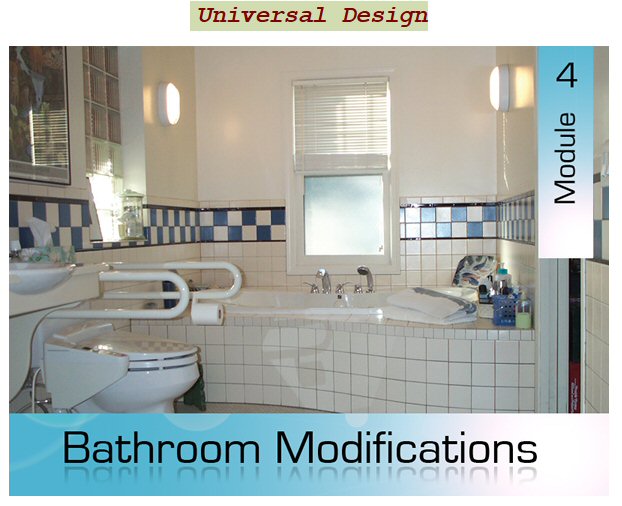
  • Universal Design – Module 4: Bathroom Modifications – ADRC

    Universal Design – Module 4: Bathroom Modifications – ADRC

    Course Summary

    There are six sections in this course:

    • Section 1:How are we Changing?
    • Section 2:The ADA, Building Codes
    • Section 3:Home Modification Ideas
    • Section 4:Determining a Strategy for Implementation
    • Section 5:Additional Resources
    • Section 6:Funding/Financial Information

    There are review questions at the end of section 1 to 3. These review questions will provide you with an opportunity to apply the knowledge and skills presented in these sections. There is a post-test at the end of the course.

    For a full description of requirements for receiving a Certificate of Completion, please go to the “Certificate of Completion” page.

    Intended Audience

    individual consumers, family members, remodeling contractors and service providers

    Learning Objectives:

    After completing this module, participants will be able to:

    • Discussthe changing demographics and implications on the built environment
    • Discussthe ADA standards and how they might be applied in the design, construction and/or remodel of a residential bathroom
    • Discussthe importance of a client goals for independence
    • Reviewexamples of bathroom modification ideas
    • Provideinformation regarding product and resources

    Pre-requisites/Learning Level

    No pre-requisites

    Competencies addressed

    Core Competencies for Public Health Professionals identified:

    Domain 2: Policy Development/Program Planning Skills

    • 2A10. Gathers information for evaluating policies, programs, and services (e.g., outputs, outcomes, processes, procedures, return on investment)

    Domain 4: Cultural Competency Skills

    • 4A3. Describes the ways diversity may influence policies, programs, services, and the health of a community
    • 4A5. Addresses the diversity of individuals and populations when implementing policies, programs, and services that affect the health of a community

    Domain 7: Financial Planning and Management Skills

    • 7A5. Contributes to development of program budgets
    • 7A6. Provides information for proposals for funding (e.g., foundations, government agencies, corporations)

    CEUs Offered

    None

    Cost

    Free

    Modality/format

    Online Self-Pace

    Length

    2 hours

    Presenter(s) and/or Content Experts

    Kelly Dinges

    Technical requirements:

    • Adobe Acrobat Reader 
    • Flash Player 
    • Speakers

    Registration requirements

    Register a free account

    Creation and/or update

    April 24, 2013

  • Knowledge of Public Health – ADRC

    Knowledge of Public Health – ADRC

    Course Summary

    The University of Iowa College of Public Health’s Upper Midwest Public Health Training Center (UMPHTC), in cooperation with the Iowa Counties Public Health Association (ICPHA), has developed a series of practiced-based educational programs targeted toward new public health administrators and nursing administrators. The programs are part of the Institute’s continuing effort to provide training to strengthen the skills and knowledge of the current public health workforce. The purpose of the course is to cover topics that are especially relevant to new public health administrators. It is hoped that by the end of the course participants will have enhanced the knowledge, skills, and abilities they need to be a successful public health administrator.

    Consists of a one hour video segment which is accessible via video streaming technology. PowerPoint slides of the presentation are provided in PDF format. Participants will be assessed through practice exercises and an online post-test.

    Intended Audience

    public health administrators and nurse administrators who are relatively new in their positions (3 years or less) and who seek to enhance their skills and knowledge

    Learning Objectives:

    After conclusion of this course, you will be able to:

    • Discusscauses of disease and protection/prevention measures
    • Listcomponents of the public health system
    • Describethe Ten Essential Services and the three core functions of public health
    • Discusschallenges for the public health system

    Pre-requisites/Learning Level

    No pre-requisites

    Competencies addressed

    Competencies identified

    Domain 1: Analytical/Assessment Skills

    • 1A1. Describes factors affecting the health of a community (e.g., equity, income, education, environment).
    • 1B1. Describes factors affecting the health of a community (e.g., equity, income, education, environment).
    • 1C1. Describes factors affecting the health of a community (e.g., equity, income, education, environment).

    Domain 2: Policy Development/Program Planning Skills

    • 2A5. Identifies current trends (e.g., health, fiscal, social, political, environmental) affecting the health of a community
    • 2A7. Describes implications of policies, programs, and services
    • 2B7. Examines the feasibility (e.g., fiscal, social, political, legal, geographic) and implications of policies, programs, and services
    • 2B8. Recommends policies, programs, and services for implementation
    • 2A9. Explains the importance of evaluations for improving policies, programs, and services
    • 2B10. Explains the importance of evaluations for improving policies, programs, and services
    • 2C11. Explains the importance of evaluations for improving policies, programs, and services
    • 2A12. Describes how public health informatics is used in developing, implementing, evaluating, and improving policies, programs, and services (e.g., integrated data systems, electronic reporting, knowledge management systems, geographic information systems).

    Domain 3: Communication Skills

    • 3A8. Describes the roles of governmental public health, health care, and other partners in improving the health of a community
    • 3B8. Describes the roles of governmental public health, health care, and other partners in improving the health of a community
    • 3C8. Describes the roles of governmental public health, health care, and other partners in improving the health of a community

    Domain 4: Cultural Competency Skills

    • 4C5. Advocates for the diversity of individuals and populations being addressed in policies, programs and services to improve the health of a community

    Domain 5: Community Dimensions of Practice Skills

    • 5A1. Describes the programs and services provided by governmental and non-governmental organizations to improve the health of a community
    • 5B1. Distinguishes the roles and responsibilities of governmental and non-governmental organizations in providing programs and services to improve the health of a community

    Domain 6: Public Health Sciences Skills

    • 6A1. Describes the scientific foundation of the field of public health
    • 6B1. Discusses the scientific foundation of the field of public health
    • 6C1. Critiques the scientific foundation of the field of public health
    • 6A2. Identifies prominent events in the history of public health (e.g., smallpox eradication, development of vaccinations, infectious disease control, safe drinking water, emphasis on hygiene and hand washing, access to health care for people with disabilities)
    • 6B2. Describes how prominent events in the history of public health (e.g., smallpox eradication, development of vaccinations, infectious disease control, safe drinking water, emphasis on hygiene and hand washing, access to health care for people with disabilities)
    • 6C2. Explains lessons to be learned from prominent events in the history of public health (e.g., smallpox eradication, development of vaccinations, infectious disease control, safe drinking water, emphasis on hygiene and hand washing, access to health care for people with disabilities)
    • 6A3. Describes how public health sciences (e.g., biostatistics, epidemiology, environmental health sciences, health services administration, social and behavioral sciences, and public health informatics) are used in the delivery of the 10 Essential Public Health Services
    • 6B3. Applies public health sciences (e.g., biostatistics, epidemiology, environmental health sciences, health services administration, social and behavioral sciences, and public health informatics) in the delivery of the 10 Essential Public Health Services
    • 6C3. Ensures public health sciences (e.g., biostatics, epidemiology, environmental health services, and social and behavioral sciences, and public health informatics) are applied in the delivery of the 10 Essential Public Health Services

    Domain 7: Financial Planning and Management Skills

    • 7A1. Describes the structures, functions, and authorizations of governmental public health programs and organizations
    • 7B1. Explains the structures, functions, and authorizations of governmental public health programs and organizations
    • 7A2. Describes government agencies with authority to impact the health of a community
    • 7A10. Describes how teams help achieve program and organizational goals (e.g., the value of different disciplines, sectors, skills, experiences, and perspectives; scope of work and timeline).

    Domain 8: Leadership and Systems Thinking Skills

    • 8A1. Incorporates ethical standards of practice (e.g., Public Health Code of Ethics) into all interactions with individuals, organizations, and communities
    • 8A2. Describes public health as part of a larger inter-related system of organizations that influence the health of populations at local, national, and global levels
    • 8A3. Describes the ways public health, health care, and other organizations can work together or individually to impact the health of a community
    • 8B3. Explains the ways public health, health care, and other organizations can work together to individually to impact the health of a community
    • 8A5. Identifies internal and external facilitators and barriers that may affect the delivery of the 10 Essential Public Health Services (e.g., using root cause analysis and other quality improvement methods and tools, problem solving)
    • 8A6. Describes needs for professional development (e.g., training, mentoring, peer advising, coaching)
    • 8A9. Describes ways to improve individual and program performance
    • 8B10. Advocates for the role of public health in providing population health services
    • 8C10. Advocates for the role of public health in providing population health services

    CEUs Offered

    None

    Cost

    Free

    Modality/format

    Online Self-Pace

    Length

    1 hour

    Presenter(s) and/or Content Experts

    Christopher Atchison, BA, MPA

    Technical requirements:

    • Adobe Acrobat Reader 
    • Flash Player 
    • Speakers

    Registration requirements

    Register a free account

    Creation and/or update

    October 15, 2013

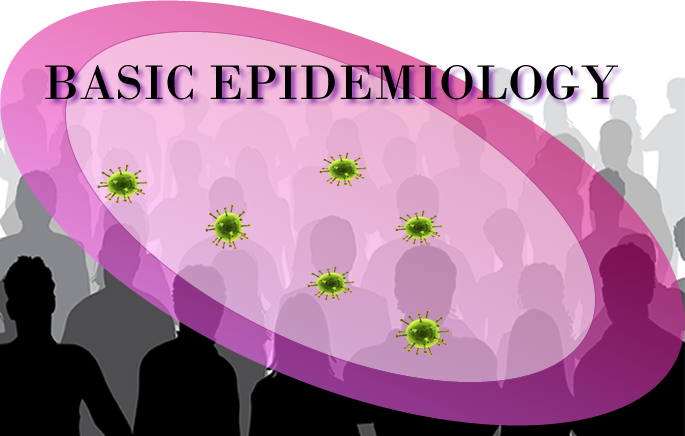
  • Basic Epidemiology – ADRC

    Basic Epidemiology – ADRC

    There are four sections in this course:

    • Section 1: Important Terms in Epidemiology
    • Section 2: Models for Understanding the Infectious Process
    • Section 3: Epidemiology in Practice
    • Section 4: Surveillance

    There are review questions at the end of modules 1 and 2. These review questions will provide you with an opportunity to apply the knowledge and skills presented in these modules. There is a quiz at the end of module 3. In addition, some modules contain
    practice exercises to help you better understand the material. 

    This course may be taken by itself, or as part of the New Public Health Administrators (NPHA) Curriculum.

    Intended Audience

    public health practitioners who do not have significant knowledge or experience in the field of epidemiology.

    Learning Objectives:

    Upon completion of this course, you will be able to:

    • Discuss important terms and concepts for basic epidemiology practice
    • Describe the inter-related aspects of the infectious disease process and methods of breaking the chain of infection
    • Apply basic epidemiology in practice, using a case study of a food-borne outbreak as an example
    • Perform basic surveillance tasks in an appropriate and timely manner
    • Utilize your regional epidemiologist as a resource for outbreak investigations

    Pre-requisites/Learning Level

    No pre-requisites

    Competencies addressed

    Core Competencies for Public Health Professionals

    Domain 1: Analytical/Assessment Skills

    1A12. Contributes to assessments of community health status and factors influencing health in a community (e.g. quality, availability, accessibility, and use of health services; access to affordable housing).

    Domain 6: Public Health Sciences Skills

    6A2. Identifies prominent events in the history of public health (e.g., smallpox eradication, development of vaccinations, infectious disease control, safe drinking water, emphasis on hygiene and hand washing, access to health care for people with disabilities).

    6A3. Describes how public health sciences (e.g., biostatistics, epidemiology, environmental health sciences, health services administration, social and behavioral sciences, and public health informatics) are used in the delivery of the 10 Essential Public
    Health Services.

    6A6. Describes evidence used in developing, implementing, evaluating, and improving policies, programs, and services.

    CEUs Offered

    None

    Cost

    Free

    Modality/format

    Online Self-Pace

    Length

    1 hour

    Presenter(s) and/or Content Experts

    Matt Hobson

    Technical requirements:

    • Adobe Acrobat Reader 
    • Speakers

    Registration requirements

    Register a free account

    Creation and/or update

    March 23, 2013

  • Practicing Cross-Cultural Communication: Community Health Worker- ADRC

    Practicing Cross-Cultural Communication: Community Health Worker- ADRC

    “Communicate to Make a Difference: Practicing Cross-Cultural Communication” is a collection of case studies that examine the practical application of the “Ten Strategies for Effective Cross-Cultural Communication,” as described in the “Exploring Cross-Cultural Communication” training. There are many facets of organizational culture. It is the awareness of these facets and how communication can affect an organization that is the focus of the “Community Health Worker Program” module. How can three different groups overcome communication challenges to work together?

    Intended Audience:

    Public health professionals including nurses, physicians, health educators.

    Learning Objectives:

    After working through this module, “Community Health Worker Program,” you will be better able to apply the following skills in your daily work:

    • Distinguish cultural perspectives.
    • Listen actively.
    • Recognize the complexity of cross-cultural communication.
    • Respect cultural differences.
    • Build self-awareness.
    • Ask questions to develop cultural knowledge.
    • Avoid stereotyping.
    • Flexibility in applying communication strategies.

    Pre-requisites/Learning Level:

    None

    Competencies addressed:

    CEUs Offered:

    CNE Credits offered until February 28, 2022. CHES and CME credits offered until May 31, 2023.

    Cost:

    Free

    Modality/format:

    Online Self-Pace

    Length:

    1 hour

    Presenter(s) and/or Content Experts:

    Technical requirements:

    • Adobe Acrobat Reader 
    • Speakers

    Registration requirements:

    Register a free account
    Creation and/or update: January 24, 2014

  • Contracts – ADRC

    Contracts – ADRC

    The University of Iowa College of Public Health’s Institute for Public Health Practice, in cooperation with the Iowa Association of Local Public Health Agencies (I-ALPHA), has developed a series of practiced-based educational programs targeted toward new public health administrators and nursing administrators. The programs are part of the Institute’s continuing effort to provide training to strengthen the skills and knowledge of the current public health workforce.

    Intended Audience

    public health administrators and nurse administrators who are relatively new in their positions (3 years or less) and who seek to enhance their skills and knowledge.

    Learning Objectives:

    At the conclusion of this course, you will be able to:

    • Listthree reasons why it is important to put agreements in writing
    • Describethe major elements of a contract

    • Describethe major guidelines for writing an effective contract

    • Describeat least two examples of actual contract used by local public health

    Pre-requisites/Learning Level

    No pre-requisites

    Competencies addressed

    Core competencies for Public Health Professionals identified

    Domain 5: Community Dimensions of Practice Skills

    • 5A5. Collaborates with community partners to improve health in a community (e.g., participates in committees, shares data and information, connects people to resources)
    • 5B6. Facilitates collaborations among partners to improve health in a community (e.g., coalition building)
    • 5C6. Establishes written agreements (e.g., memoranda-of-understanding [MOUs], contracts, letters of endorsement) that describe the purpose and scope of partnerships

    Domain 7: Planning and Management Skills

    • 7A7. Provides information for development of contracts and other agreements for programs and services

    CEUs Offered

    None

    Cost

    Free

    Modality/format

    Online Self-Pace

    Length

    1 hour

    Presenter(s) and/or Content Experts

    Marty Ralston

    Technical requirements:

    • Adobe Acrobat Reader 
    • Flash Player 
    • Speakers

    Registration requirements

    Register a free account

    Creation and/or update

    September 17, 2013